A sensational “mutiny” headline alleges Team USA’s veteran starters threatened to quit after Cheryl Miller defended Caitlin Clark.
However, no verified reporting supports claims involving packed bags, hallway tears, secret photographs, or organized player rebellion.
Reviews of USA Basketball, FIBA, and credible national coverage reveal a successful team preparing for Spain’s semifinal challenge.
That reality may sound less explosive, yet the genuine basketball story remains powerful, complicated, and enormously consequential.
Clark’s emergence has created legitimate strategic questions without establishing sabotage, jealousy, humiliation, or a fractured American locker room.
The distinction matters because women’s basketball deserves passionate analysis grounded in performances, statistics, interviews, and verifiable developments.
Viral storytelling frequently transforms ordinary rotation debates into personal warfare because outrage travels faster than careful tactical discussion.

In this case, the available evidence presents competition for minutes, generational transition, and an undefeated championship contender.
It does not present veterans abandoning their country after receiving an imaginary lecture from an unaffiliated basketball legend.
Cheryl Miller remains one of basketball’s most respected voices, but she is not coaching this national team.
Kara Lawson leads the United States, supported by players balancing personal stature against an uncompromising championship mission.
Miller coached Clark and Angel Reese during the memorable 2024 WNBA All-Star victory over America’s Olympic roster.
That connection naturally makes Miller an attractive character for online narratives centered around Clark’s treatment and recognition.
Still, history between Miller and Clark cannot authenticate an alleged confrontation unsupported by recordings, transcripts, or identified witnesses.
The viral account supplies dramatic language but offers no credible documentation proving that such a locker-room showdown occurred.
No reputable outlet reports that Breanna Stewart, Napheesa Collier, Jackie Young, Kahleah Copper, or Chelsea Gray threatened departure.
Those five veterans formed Lawson’s preferred starting lineup throughout the early tournament, according to USA Basketball’s official preview.
Their continued participation contradicts the idea that America’s starters packed luggage while emotionally rejecting Miller’s supposed criticism.
The verified story begins with Team USA destroying Hungary 108–56 during Thursday’s World Cup quarterfinal in Berlin.
That victory extended America’s tournament winning streak and secured an eleventh consecutive Women’s World Cup semifinal appearance.
FIBA reported America entered the Spain matchup carrying thirty-four consecutive World Cup victories across multiple championship generations.
A genuine mutiny would represent extraordinary global news, especially during an undefeated defending champion’s decisive knockout victory.
Instead, official coverage emphasized records, balanced scoring, aggressive defense, transition offense, and overwhelming contributions throughout Lawson’s rotation.
Team USA generated thirty-one assists against Hungary, displaying precisely the shared decision-making supposedly destroyed by internal hostility.
Clark contributed ten points, nine assists, three rebounds, and two steals during twenty productive minutes off the bench.
Her official tournament averages became 8.5 points, seven assists, and 2.8 rebounds through four American victories.
Those numbers demonstrate meaningful influence while also revealing why responsible discussion must extend beyond simple scoring totals.
Clark’s shooting remained inconsistent, including 32.3 percent overall and 26.3 percent from three through the Hungary quarterfinal.
Yet her passing repeatedly accelerated possessions, located shooters early, and punished defenses before their preferred structures became organized.
That ability gives America something different from Gray’s measured orchestration and Young’s physical, defensively forceful attacking style.
Lawson’s challenge involves combining those contrasting strengths without treating one player’s opportunity as another player’s public rejection.
The veteran starters bring championship experience, defensive versatility, physical reliability, and familiarity with pressure-filled international elimination games.
Clark brings extraordinary passing vision, deep shooting gravity, rapid transition decisions, and immediate energy capable of changing tempo.
Both statements can remain true without transforming a strategic conversation into allegations that teammates secretly resent her popularity.
Clark’s supporters understandably want more minutes because her playmaking creates possibilities few guards can recognize or execute consistently.
Her eleven-assist senior national-team debut against China immediately demonstrated how naturally her vision translates beyond the WNBA.
Clark produced fourteen points, eleven assists, three rebounds, and zero turnovers during America’s commanding 94–61 opening victory.
That performance established an extraordinarily high expectation for every later appearance, regardless of opponent, matchup, or game context.
Her next outing showed international competition’s unpredictability when Italy slowed America and nearly produced a historic upset.
Clark scored one point and missed all six field-goal attempts as Team USA escaped with a 55–52 victory.
That difficult afternoon did not erase her debut, but it illustrated why coaching decisions cannot depend entirely upon popularity.
Against Czechia, Clark rebounded with nine points and seven assists while America restored its customary offensive control.
Then Hungary received the complete force of America’s depth, defensive pressure, speed, size, and increasingly comfortable young reserves.
Clark again directed traffic beautifully, repeatedly delivering passes that converted disrupted possessions into efficient American scoring opportunities.
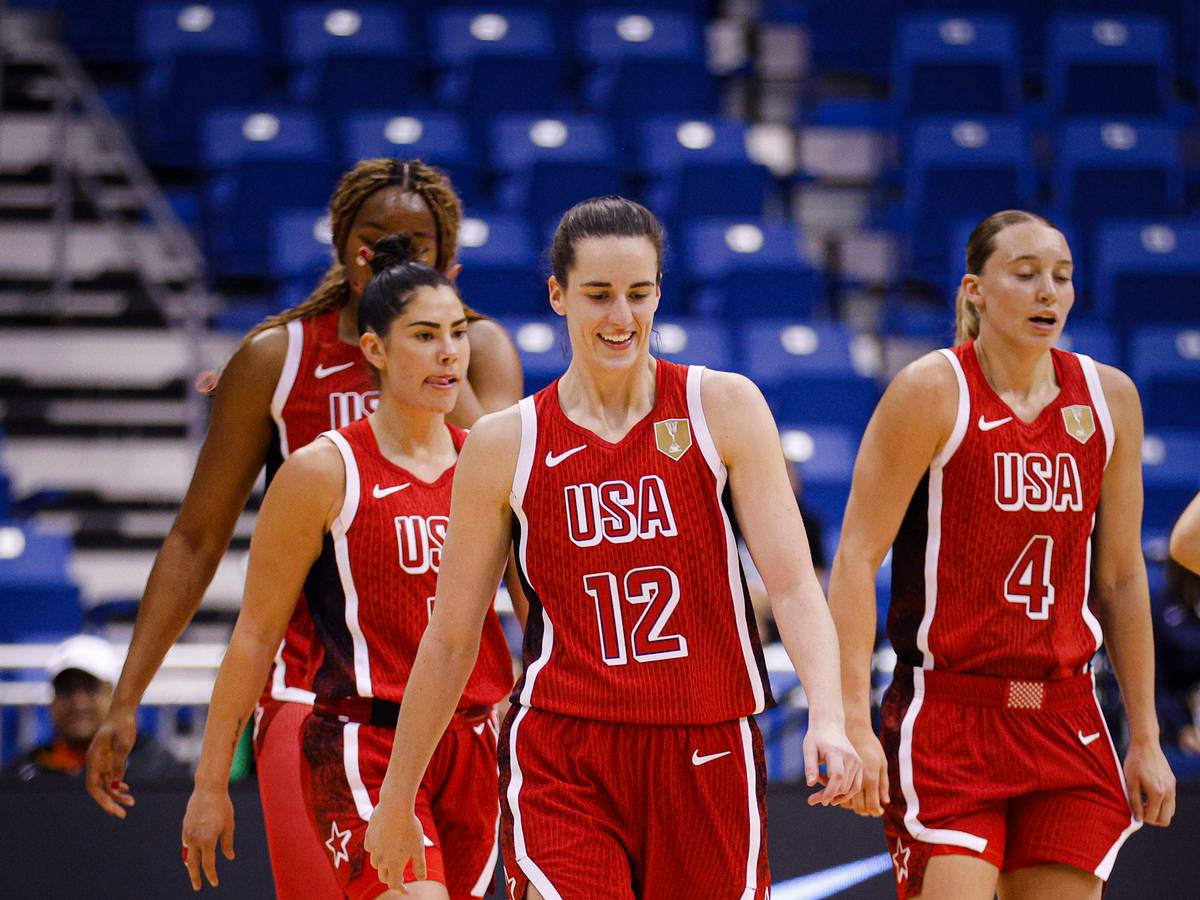
Her nine assists against Hungary brought her tournament total to twenty-eight, ranking third among World Cup players afterward.
Those statistics support arguments for expanding her responsibility, especially whenever opponents struggle defending pace and early offensive actions.
They do not prove Lawson is sabotaging Clark, because Clark has actually led America in average playing time.
Through four games, she averaged 21.5 minutes despite entering each contest as a reserve rather than starting.
That deployment resembles a sixth-player role designed to control second units and connect mixed lineup combinations effectively.
Starting remains symbolically important, particularly for a superstar whose presence commands enormous audiences and relentless public attention.
Nevertheless, finishing games, handling possessions, and influencing decisive stretches reveal substantially more than ceremonial pregame introductions.
A reserve can become the tactical center of a championship team without appearing among the opening five players.
Manu Ginóbili demonstrated that principle internationally and professionally, although every situation naturally contains different personnel considerations.
Clark’s current assignment lets her enter after observing defensive coverages, then immediately attack vulnerabilities with fresh legs.
It also protects lineup balance because Gray provides steadiness while Clark supplies acceleration against transitioning or fatigued defenders.
Whether that remains optimal against Spain deserves serious examination, because semifinal opponents punish weaknesses more effectively than Hungary.
FIBA identified America’s transition advantage, noting 17.3 fast-break points compared with Spain’s 8.8 before their semifinal.
The organization also highlighted America’s remarkable 48.8 bench points per game, illustrating the importance of reserve production.
Clark’s role therefore belongs inside America’s competitive identity, rather than representing exile from Lawson’s preferred basketball system.
A compelling debate asks whether her passing should influence more possessions alongside Stewart, Collier, Copper, and Young.
That question becomes especially important when defenses crowd America’s frontcourt or force half-court possessions deep into shot clocks.
Clark can bend defensive positioning before touching the paint because opponents must respect her shooting several feet beyond regulation.
Her gravity opens cutting lanes, weak-side exchanges, and interior seals that traditional box-score analysis occasionally fails to capture.
However, Spain can attack her defensively, place her inside screening actions, and test communication through repeated physical movement.
Lawson must calculate whether Clark’s offensive creation exceeds whatever advantage Spain might pursue against her defensive assignments.
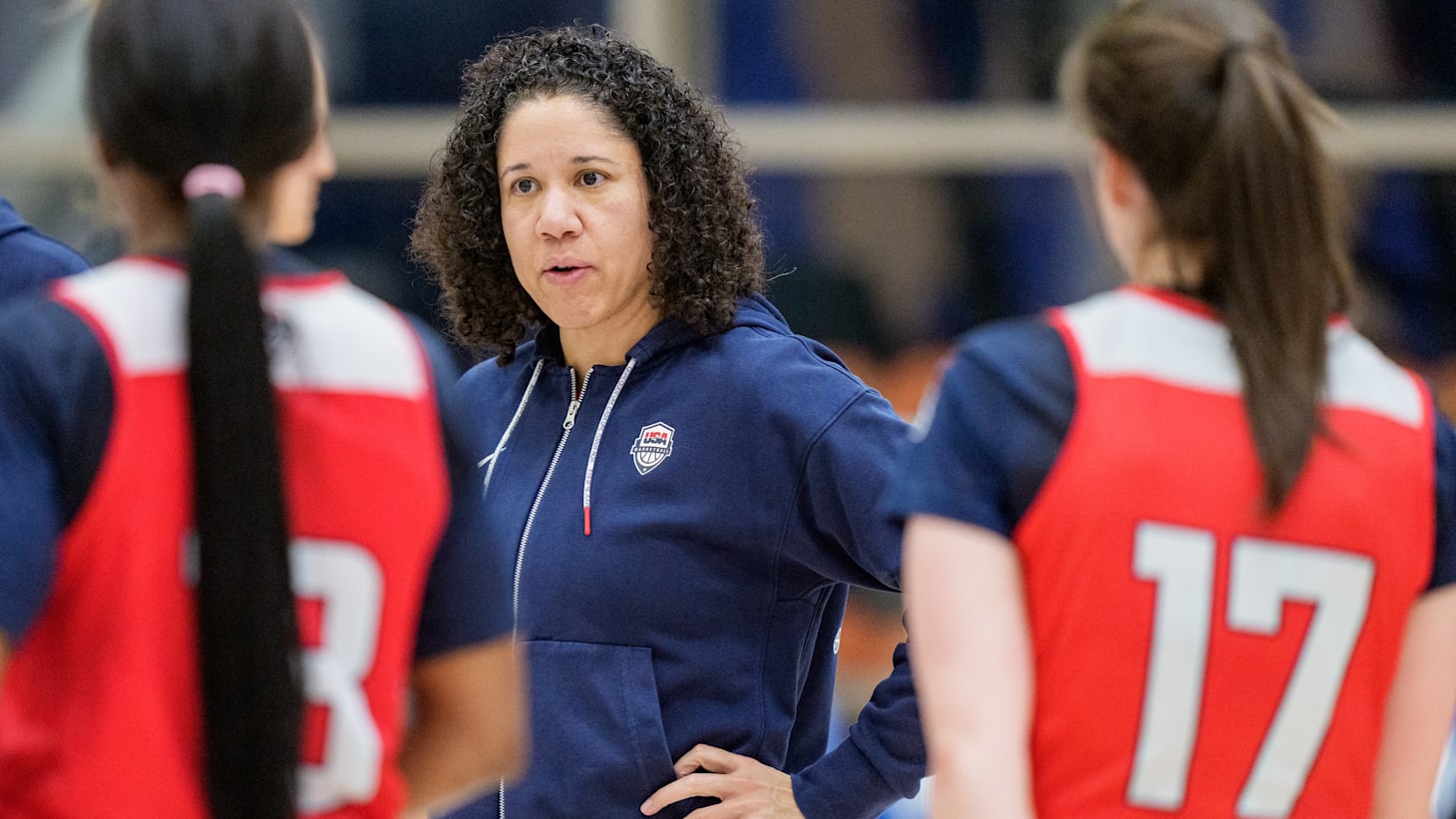
That is coaching, not conspiracy, and reasonable observers can disagree strongly while respecting the evidence surrounding each decision.
The viral “mutiny” narrative removes those fascinating tactical layers and substitutes villains, victims, threats, tears, and imaginary ultimatums.
It reduces accomplished veterans into jealous caricatures while presenting Clark as powerless despite her considerable authority and confidence.
That portrayal ultimately diminishes everybody, including Clark, whose basketball brilliance requires no invented persecution campaign for validation.
She has publicly described representing America as an extraordinary privilege instead of framing her reserve role as humiliation.
Reporting from Berlin portrays Clark studying championship leadership, embracing team-first responsibilities, and appreciating the national-team experience deeply.
She reportedly watched material featuring Mike Krzyzewski discussing sacrifice with American men’s teams filled with established professional superstars.
That choice suggests preparation for collective responsibility, not participation in a locker room collapsing under wounded veteran pride.
Clark understands that national teams require different roles because every roster member arrives accustomed to handling major responsibilities.
Young, Copper, Stewart, Collier, and Gray did not become lesser players merely because Clark became women’s basketball’s largest attraction.
Likewise, Clark does not become less transformative because Lawson currently prefers her explosive passing against opposing reserve combinations.
The healthiest interpretation recognizes abundance: America possesses several elite creators capable of controlling games through different methods.
Competition becomes dangerous only when commentary assigns malicious motives without evidence and encourages supporters to attack other players.
Women’s basketball has experienced particularly aggressive misinformation because emotional narratives generate engagement from audiences still learning its ecosystem.
Fabricated confrontations often follow predictable structures involving secret meetings, savage quotations, unnamed witnesses, and mysteriously unavailable recordings.
The latest claim includes every familiar ingredient: humiliation, rebellion, luggage, hallway crying, and an allegedly concealed photograph.
Yet none appears within official reporting, credible journalism, postgame interviews, tournament footage, or identified firsthand testimony.
The “secret photo” framing represents a classic engagement device, promising visual proof beneath links that frequently deliver unrelated content.
Readers should ask who captured the image, when it appeared, whether identities are visible, and who independently authenticated it.
Without those answers, an emotionally suggestive picture cannot establish why someone cried, where they stood, or what occurred.
Athletes experience exhaustion, injury, family stress, competitive disappointment, and countless private emotions during demanding international tournaments.
Assigning an invented cause to an ambiguous expression is not investigative reporting; it is narrative construction designed for virality.
Miller’s authentic history with Clark makes the fictionalized story feel plausible to casual viewers unfamiliar with current team operations.
During the 2024 All-Star weekend, Miller coached Team WNBA, featuring Clark and Reese, against Cheryl Reeve’s Olympic squad.
Team WNBA won 117–109, while Clark demonstrated her familiar playmaking and helped defeat a veteran-loaded American roster.
Miller approached that exhibition competitively and publicly emphasized winning, giving later content creators useful footage and emotional imagery.
But a previous coaching relationship cannot place Miller inside Lawson’s 2026 locker room without credible evidence confirming involvement.
Furthermore, Miller’s recent public commentary about Clark has included criticism, reconsideration, empathy, and recognition of overwhelming expectations.
That nuanced record clashes with viral depictions presenting Miller as an unquestioning defender delivering theatrical condemnations against Clark’s teammates.
Authentic basketball discussion permits admiration and criticism simultaneously because serious evaluation never requires permanent allegiance to personalities.
Miller can appreciate Clark’s talent while questioning frustration, body language, decisions, or defensive commitment during specific moments.
She can later reconsider criticism after receiving additional context, which represents thoughtful analysis rather than contradiction or betrayal.
Clark herself has consistently shown resilience when conversations surrounding her become louder than the basketball actually being played.
Since entering professional basketball, she has encountered physical defenses, enormous expectations, injuries, cultural arguments, and unprecedented scrutiny.
Her response has generally remained centered upon improving, competing, connecting teammates, and understanding how defenses challenge her strengths.
That mentality appeared against Hungary, where she controlled tempo without forcing shots simply to satisfy individual statistical expectations.
Nine assists reflected patience, trust, timing, and recognition that America’s superior talent becomes devastating through immediate ball movement.
She repeatedly advanced possessions before Hungary established its defense, creating favorable numbers and forcing desperate rotations around shooters.
Those contributions deserve praise without claiming they provoked emotional collapse among decorated champions sharing exactly the same objective.
Collier led America with nineteen points against Hungary, delivering efficient offense while maintaining the defensive activity central to Lawson’s system.
Stewart continued providing length, versatility, rebounding, and championship composure essential against increasingly experienced international frontcourts.
Gray remains among basketball’s most intelligent organizers, capable of manipulating defenders through pace, angles, and patient screening reads.
Young supplies point-of-attack defense and powerful downhill pressure, while Copper attacks space with speed and fearless physicality.
These are not anonymous obstacles positioned between Clark and greatness; they are elite players pursuing another American championship.
Respecting their achievements does not require ignoring Clark’s argument for increased usage during the tournament’s most demanding moments.
Likewise, praising Clark does not require inventing jealousy among teammates whenever Lawson chooses another player for a particular assignment.
The best semifinal formula may eventually feature Gray and Clark together, combining controlled organization with aggressive passing ambition.
It might also include Clark beside Reese, whose screening, rebounding, mobility, and transition speed complement the guard’s adventurous vision.
Clark and Reese produced encouraging chemistry against Hungary, continuing a partnership that once appeared unlikely amid manufactured rivalry narratives.
Both players have spoken positively about sharing the national-team experience and enjoying their opportunities as teammates in Berlin.
Their connection carries significance because basketball culture repeatedly attempted to position them as permanent enemies representing competing constituencies.
On the court, those narratives become irrelevant when Clark sees Reese sprinting and delivers the ball into advantageous space.
Reese’s relentless movement rewards Clark’s willingness to attempt passes that conventional guards might consider unnecessarily ambitious.
Their development offers Lawson another change-of-pace combination capable of increasing defensive pressure, rebounding activity, and transition opportunities.
Paige Bueckers similarly provides smooth scoring, secondary creation, and positional flexibility within America’s talented younger group.
The roster therefore reflects transition without abandonment, as veteran leadership works alongside players shaping the next international cycle.
Generational change can produce difficult conversations, but difficulty should never automatically become evidence of resentment, conspiracy, or mutiny.
America’s history demands constant renewal because legendary players eventually depart while championship expectations remain completely unchanged.
Sue Bird and Diana Taurasi once represented youth challenging established hierarchies before becoming the standards younger guards studied.
Clark now enters that continuum, inheriting Taurasi’s celebrated number twelve while developing her distinctive national-team identity.
Taurasi publicly supported that succession, saying she could not imagine somebody more appropriate wearing her former American number.
That endorsement provides a verified example of veteran encouragement, sharply contrasting unsupported claims about widespread hostility toward Clark.
The same evidence-first standard should govern every supposed Miller statement, player threat, coaching conspiracy, or locker-room confrontation.
If authentic audio emerges, reputable organizations can examine its origin, context, editing, participants, date, and complete conversation.
Until then, declaring an entire starting lineup rebellious represents speculation masquerading as established breaking news.
There is also a practical problem with the alleged walkout: America was preparing for Spain’s scheduled semifinal.
FIBA listed Spain and the United States for Saturday evening, with Sunday’s championship game awaiting the winner.
Spain reached that stage after defeating Australia 89–66, offering substantially greater resistance than Hungary managed.
Their young frontcourt, disciplined structure, and defensive priorities provide genuine danger demanding complete American concentration and collective trust.
A fractured roster would display consequences through absences, altered availability reports, canceled appearances, or official disciplinary statements.
Nothing credible indicates those developments, while tournament coverage continues discussing matchups, statistics, lineups, and America’s championship expectations.
Therefore, the responsible conclusion remains straightforward: no verified mutiny occurred, and no five-player resignation threat has surfaced.
That conclusion does not eliminate controversy surrounding Clark’s reserve status or Lawson’s veteran-heavy starting preference.
Fans may reasonably argue that America’s best offensive ceiling requires Clark receiving earlier minutes beside its strongest finishers.
Others may reasonably favor continuity from a starting group whose defense establishes control before reserves increase offensive tempo.
Evidence supports both tactical interpretations, but evidence currently supports neither sabotage nor coordinated veteran hostility.
The semifinal can provide better answers because Spain’s defense will test America’s execution across longer competitive stretches.
If the starters struggle generating quality shots, Lawson may need Clark’s imagination sooner than previous games required.
If Clark experiences defensive difficulties, Lawson may counter with switching lineups or carefully selected offensive-defensive substitutions.
Those adjustments would reveal coaching priorities under pressure, providing meaningful material for analysis after the final buzzer.
They still would not retroactively prove hidden grudges simply because particular supporters disagree with substitution timing.
Clark’s greatest contribution may become her willingness to embrace uncertainty while remaining prepared to transform any available possession.
Great point guards read games before controlling them, and reserve minutes can offer valuable information about opponent tendencies.
She can observe Spain’s pick-and-roll coverage, identify weak-side defenders, and notice which American cutter receives insufficient attention.
Upon entering, she can immediately target those details, turning observation into the rapid offensive decisions defining her game.
That possibility makes her bench role strategically interesting, even if many observers continue believing she should start.
The veterans also face responsibility for maximizing Clark rather than merely coexisting with her enormous public presence.
Screeners must create separation, runners must maintain pace, and shooters must remain prepared for passes arriving unexpectedly.
Clark’s daring only becomes productive when teammates trust her vision and complete movements before openings visibly emerge.
Hungary demonstrated increasing synchronization, especially when America’s younger players attacked through speed instead of prolonged individual possessions.
Building that connection matters more than manufacturing interpersonal conflict from photographs, gestures, or selective video clips.
The coming games will determine whether America’s balance survives elite pressure and whether Clark’s role continues expanding naturally.
A championship would validate collective adaptation, though it would not automatically settle every strategic disagreement surrounding the rotation.
A defeat would invite scrutiny, but critics should analyze possessions, matchups, turnovers, shooting, and substitutions before assigning motives.
Basketball offers enough genuine drama through competition, pressure, strategy, personalities, and consequences without requiring fabricated locker-room warfare.
Clark’s rise remains historic because defenses change around her, audiences follow her, and teammates benefit from her imagination.
Miller’s legacy remains secure because her playing greatness helped establish standards future American stars continue pursuing.
Lawson’s reputation will depend upon tournament results, player development, tactical flexibility, and handling an unusually scrutinized roster.
The veterans’ standing should reflect their performances and professionalism, not unsupported allegations engineered to exploit Clark’s popularity.
Team USA is not officially collapsing; it is advancing through a World Cup while negotiating extraordinary depth.
That truth contains more substance than the mutiny fantasy because championship teams constantly manage ambition, sacrifice, and imperfect roles.
Clark deserves greater opportunities whenever her production demands them, and Lawson deserves evaluation based upon observable basketball decisions.
Veterans deserve respect without immunity from criticism, while viral publishers deserve skepticism whenever extraordinary claims arrive without documentation.
The Hungary blowout showed an American team sharing possessions, defending collectively, and receiving valuable contributions across generations.
It also confirmed Clark’s playmaking can become one of America’s most dangerous weapons during the championship rounds.
What happens next should be measured through the semifinal floor, not through imaginary suitcases supposedly photographed inside hallways.
If Clark changes the game against Spain, her argument for expanded responsibility will become stronger through undeniable competitive evidence.
If veterans deliver, their starting positions will appear strategically justified rather than politically protected by an embattled coaching staff.
Either outcome offers authentic tension, legitimate consequences, and compelling basketball without turning successful women into fictional enemies.
For now, the explosive headline collapses under examination, while the real Caitlin Clark story continues gathering championship momentum.
No mutiny has been verified, no walkout established, and no secret Miller confrontation authenticated by credible reporting.
What remains is an undefeated American team, a gifted reserve playmaker, and a semifinal demanding everyone’s best basketball.


