THE DAY THE CHIEF SPOKE: Harry S. Truman’s Raw Reaction, Complex Political History, and Immediate Outcry Following the Assassination of John F. Kennedy
On the afternoon of November 22, 1963, the chilling news flash from Dallas, Texas, tore across the United States with devastating swiftness: President John F. Kennedy had been shot. As the nation plunged into a state of profound collective shock, paralyzed by television screens and radio broadcasts tracking the unfolding tragedy at Parkland Memorial Hospital, the reverberations reached far beyond Washington. In Independence, Missouri, former President Harry S. Truman—living a quiet retirement surrounded by the archives of his own historic presidency—received the bulletins that the young commander-in-chief had succumbed to his wounds. Stepping outside his home to face a scrambling cluster of reporters and television cameras, the 33rd president delivered a brief, unfiltered, and deeply human response that instantly cut through the standard parameters of political diplomacy.
Displaying his characteristic, no-nonsense Midwestern bluntness, Truman did not hide his raw emotional distress, nor did he attempt to mask his indignation toward the senseless violence that had just upended the American republic. Speaking with a visible tremor of agitation and sorrow, Truman offered words that would immediately be captured by newsreel crews and broadcast to a mourning nation:
“I was very much shocked and hurt when I heard. He was a good man, an able President, and he did a good job. And it’s too bad these things have to happen particularly by some good-or-nothing fella who didn’t have anything else to do than to try and take the head of state away from us.”
This stark, unscripted statement carried immense historical weight, particularly given the complex, often tense and competitive relationship that had long existed between the veteran from Missouri and the young, charismatic leader from Massachusetts. Just three years prior, during the bruising 1960 Democratic presidential primaries, their political friction had burst openly into the public sphere. Truman, who had initially thrown his powerful backing behind Missouri Senator Stuart Symington, did not mince words regarding Kennedy’s candidacy at the time. Publicly questioning whether Kennedy possessed the requisite seasoning for the highest office, Truman famously remarked that the young senator was too inexperienced, bluntly advising him at one point that he ought to wait and “take a few more years” to mature politically. Kennedy, showing his own sharp wit and strategic poise, famously quipped back that while he respected elder statesmen like Truman, perhaps it was time for the older generation to realize that a new crop of leaders was ready to take the helm.
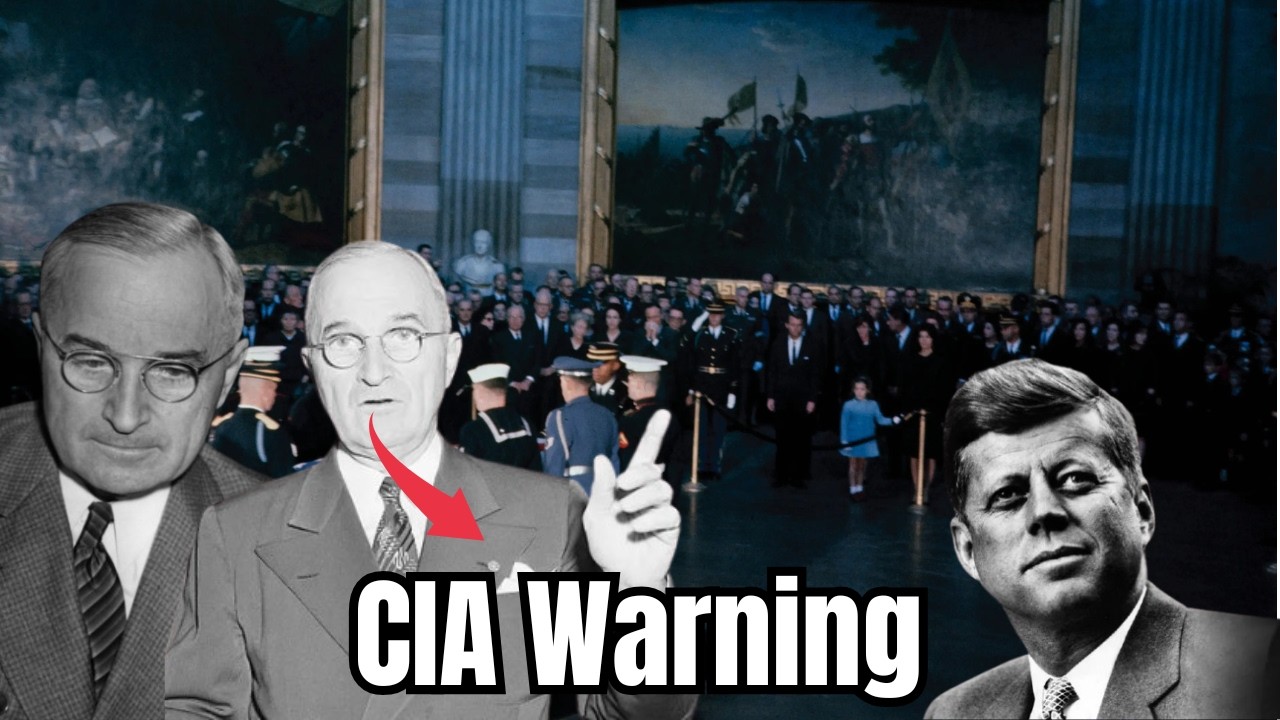
Beneath the surface of their public electoral sparring, however, lay a deep, foundational mutual respect rooted in the shared, crushing burdens of the American presidency. Truman understood better than almost anyone alive the lonely, unforgiving nature of the Oval Office—the agonizing weight of commanding a global superpower during the volatile escalation of the Cold War. Thus, when the ultimate tragedy struck in Dealey Plaza, all prior political disagreements, generational friction, and primary season rivalries instantly dissolved. Truman did not view Kennedy through the lens of a political opponent or a party rival; he viewed him as a fellow occupant of the most exclusive and perilous office in the world, a man cut down in the prime of his life by an assassin’s bullet.
The emotional gravity of the moment was further underscored just days later when Truman traveled to Washington, D.C., alongside former President Dwight D. Eisenhower, to attend the state funeral. Television cameras captured the poignant, heavy-hearted image of the aging former leaders standing side by side to pay their final respects beneath the dome of the U.S. Capitol—a powerful visual testament to an era when partisan divides, no matter how sharp, were capable of yielding entirely to national unity in times of catastrophic crisis.
Yet, Truman’s engagement with the aftermath of Kennedy’s assassination extended far beyond public eulogies and sorrowful press statements. In the weeks that followed the national trauma, Truman’s contemplative grief turned into a sharp, institutional critique regarding the hidden machinery of government. Exactly one month after the assassination, in December 1963, Truman penned a remarkable, widely discussed op-ed published in The Washington Post under the title “Limit CIA Role To Intelligence”. Deeply disturbed by the shadowy directions into which peacetime intelligence operations had drifted—and haunted by the geopolitical volatility that characterized the early 1960s, including the Bay of Pigs and the escalating tensions of the Cold War—Truman publicly argued that the Central Intelligence Agency had strayed dangerously far from its original World War II-era mandate of gathering objective foreign intelligence. He called for a fundamental restructuring and reigning in of “peacetime cloak and dagger operations”, fearing that covert operations were beginning to usurp the proper constitutional channels of American democracy.
Ultimately, the words Harry Truman uttered on the sunny, bitter afternoon of November 22, 1963, captured more than just a personal reaction to a national mourning. They reflected an instinctive, protective defense of the American presidency itself. By brushing aside political grievances to honor a younger colleague as “a good man, an able President, and a good job”, Truman spoke for a nation grappling with the abrupt shattering of its innocence. His blunt condemnation of the assassin as a “good-for-nothing fella” encapsulated the raw, unpolished fury of a citizen-statesman who recognized that an attack on the head of state was an attack on the very soul of the country.


