Governor Bill Lee Halted Tennessee Executions for the Rest of 2026—but No Verified Federal Contempt Threat or “Executive Hotline” Tape Has Surfaced
Tennessee has paused its execution schedule after Christa Pike survived the state’s September 30 lethal-injection attempt.
That part of the newest viral claim is real.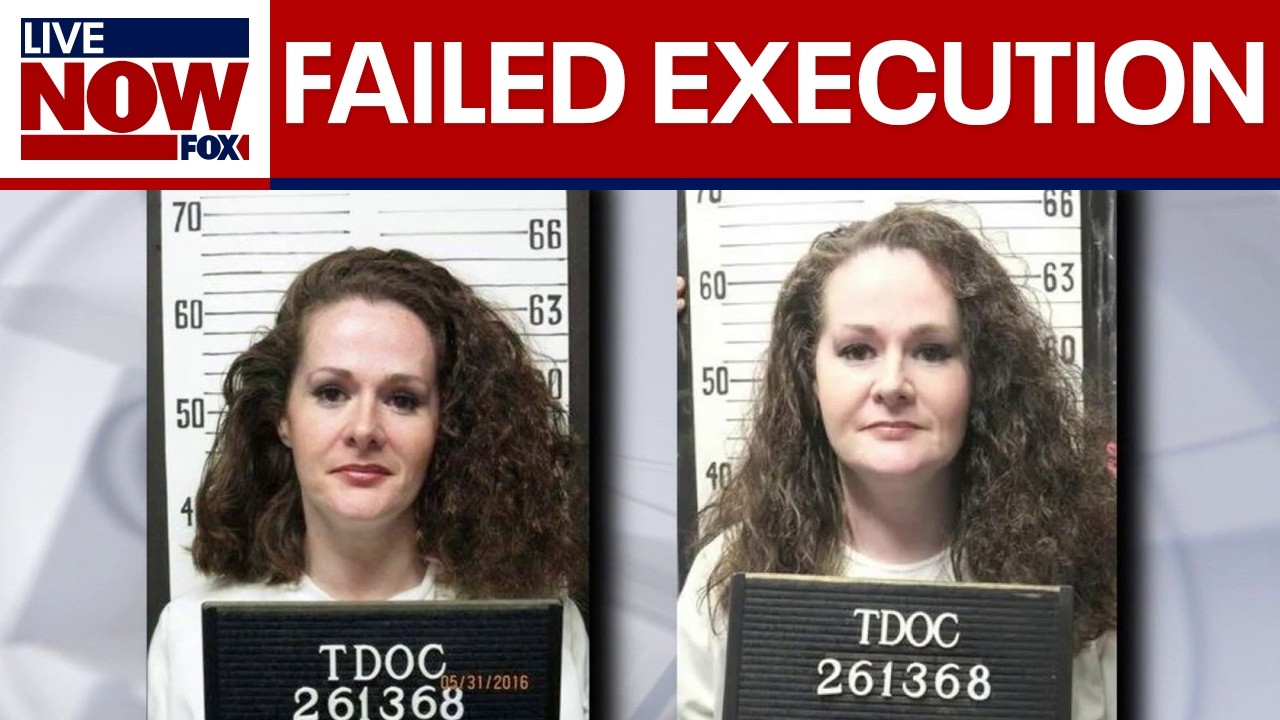
Governor Bill Lee halted Tennessee executions through the remainder of 2026 and ordered an independent investigation into what happened at Riverbend Maximum Security Institution.
But several of the most dramatic details now circulating online are not supported by current evidence.
There is no verified federal contempt threat against Lee.
There is no public federal order threatening Tennessee officials with sanctions if executions continue.
There is no authenticated executive-hotline recording of aides panicking over an imminent nationwide civil-rights injunction.
And there is no evidence that Lee secretly ordered a drug freeze specifically to stop such an injunction.
The distinction begins with the scope of the governor’s action.
Associated Press reported that Lee halted the one remaining Tennessee execution scheduled for the rest of 2026.
Reuters similarly reported that the governor suspended executions for the remainder of the year and ordered an investigation.
That is significant.
It is not the same thing as permanently abolishing executions in Tennessee.
It is not an indefinite constitutional prohibition.
And it is not a nationwide halt.
The immediate effect is on Tennessee’s own execution schedule through the end of 2026.
Reporting identifies Gary Wayne Sutton’s planned December execution as the remaining execution affected by the pause.
That means the viral phrase “frozen all state executions” is only accurate if it is carefully limited to the state’s currently scheduled executions through year-end.
It becomes misleading if it implies a permanent statewide prohibition.
Lee has not announced that Tennessee is abandoning capital punishment.
Nor has he announced that lethal injection is permanently unavailable.
Instead, he has ordered the state to investigate why the September 30 process failed.
That failure was extraordinary.
Tennessee attempted to execute Pike using pentobarbital.
The state administered two rounds of the drug.
Pike remained alive.
She complained of arm pain.
Witnesses continued hearing breathing or snoring.
And she was ultimately taken away from Riverbend for medical treatment.
Reuters reports that Pike is receiving lifesaving care after surviving the procedure.
Her attorneys describe her condition as critical.
That outcome immediately created questions about Tennessee’s execution protocol.
Governor Lee publicly acknowledged those questions.
WSMV reported that Lee said Tennesseans expect death sentences to be carried out legally, constitutionally and effectively.
He then said what happened to Pike did not meet that expectation.
That is the publicly documented basis for the review.
The governor did not publicly say federal judges had threatened him with contempt.
He did not say the Justice Department threatened prosecution.
He did not say an emergency federal injunction was moments away.
And he did not say his decision was designed to prevent a federal court from shutting down Tennessee’s death chamber.
Those additions are unsupported.
The Tennessee Department of Correction issued its own statement late on September 30.
TDOC said staff had followed every step of Tennessee’s lawful established execution protocol.
The department said the lethal-injection chemical had consistently been effective previously.
It also said the protocol did not authorize any further procedure beyond what had already occurred.
Pike was then transferred to an off-site medical facility.
That statement raises obvious questions.
If every prescribed step was followed, why did the execution fail?
If pentobarbital had worked previously, why did Pike remain alive?
If the protocol reached its endpoint with Pike still breathing, what contingency existed beyond that point?
Those are precisely the kinds of questions an independent review can examine.
They are different from the claim that federal authorities forced Lee to halt executions.
No current credible reporting establishes that.
The phrase “federal contempt threats” is especially serious.
Contempt is not simply political criticism.
A federal court generally uses contempt powers to enforce an existing judicial order.
For Tennessee officials to face contempt over executions, there would ordinarily need to be a relevant court directive that officials were accused of violating.
No such contempt order tied to Lee’s October 1 decision appears in the current public record reviewed here.
There is no identified judge.
No docket number.
No written warning.
No sanctions hearing.
No contempt motion.
No public order threatening the governor.
That absence makes the viral allegation unsupported.
Pike’s lawyers certainly have constitutional arguments.
They have already described the failed procedure in severe terms.
They say she suffered unnecessarily.
They have called for her sentence to be commuted.
And any future attempt to execute Pike could produce major Eighth Amendment litigation.
But potential future litigation is not the same thing as an existing contempt threat.
The Eighth Amendment prohibits cruel and unusual punishment.
Pike’s lawyers could argue that the September 30 procedure exposed her to severe pain and that another attempt would create an unconstitutional risk.
They could seek injunctive relief.
They could ask federal courts to prevent another execution while those claims are litigated.
None of that automatically establishes that Lee faced an immediate injunction when he announced the pause.
No current reporting shows that such an injunction had already been prepared or threatened.
The alleged “civil rights injunction” therefore remains speculative.
A civil-rights lawsuit is certainly possible.
Death-row prisoners frequently challenge execution protocols under federal civil-rights law.
But courts evaluate specific claims.
They do not automatically issue sweeping orders simply because an execution fails.
The legal process requires filings, evidence, responses and judicial rulings.
That process has not produced the dramatic nationwide order described in the viral caption.
The word “devastating” is also rhetorical.
A federal injunction could restrict Tennessee’s ability to conduct executions under particular circumstances.
But its scope would depend entirely on what a court ordered.
A judge could stop one execution.
A court could restrict one protocol.
A broader ruling could affect multiple prisoners.
Different outcomes carry very different legal consequences.
The viral claim skips all those distinctions.
It presents a hypothetical worst-case result as if senior aides already knew it was coming.
There is no verified evidence of that.
The alleged ten-second executive-hotline recording has the same problem.
No reputable news organization has authenticated such a file.
No Tennessee official has confirmed the recording.
No senior aide has acknowledged being on it.
No original audio with metadata has been published.
No complete conversation has surfaced.
No court filing cites it.
And no governor’s-office release references it.
Without those elements, the recording cannot be treated as reliable evidence.
The phrase “executive hotline” itself is vague.
What hotline?
Between which offices?
Was it the governor’s office and TDOC?
The attorney general?
A federal court?
Emergency management?
No source has established that.
Short anonymous audio clips are particularly weak evidence.
Ten seconds can remove context.
A sentence can be cut from a longer conversation.
Different speakers can be misidentified.
Old audio can be relabeled.
Synthetic voices can be generated.
And subtitles can make indistinct speech appear far more definitive than it is.
A recording this consequential would require authentication.
None has been demonstrated publicly.
The claim that Lee ordered an “immediate drug freeze” also needs clarification.
The governor halted executions.
That means Tennessee is not presently carrying out its remaining scheduled 2026 execution.
But that does not necessarily mean the state has formally frozen, seized or prohibited all pentobarbital inventory.
No public order reviewed here uses the phrase “drug freeze.”
No state release says Tennessee has ordered all execution chemicals impounded.
No credible report says pharmacies or suppliers received an emergency stop notice.
The operational pause is real.
A specific pharmaceutical freeze is not publicly established.
This distinction matters because Tennessee’s lethal-injection system already has a history of review and suspension.
Governor Lee previously halted executions in 2022 after a protocol problem involving the scheduled execution of Oscar Smith.
Tennessee then commissioned an independent review.
The Department of Correction later revised its lethal-injection protocol.
In December 2024, TDOC announced that the revised procedure would use a single drug, pentobarbital.
Commissioner Frank Strada said at the time that he was confident executions could proceed in compliance with policy and state law.
The Pike failure therefore creates an especially difficult problem for the administration.
The system had already been reviewed.
The protocol had already been revised.
The state had already publicly expressed confidence in it.
Yet Pike survived.
That history helps explain why Lee ordered another investigation.
It does not require an unverified federal ultimatum to explain the decision.
The state itself had an obvious reason to stop.
An execution procedure designed to produce death failed even after a backup drug round.
Another Tennessee execution scheduled only months later would raise immediate questions about whether the same process could safely and legally be used again.
Pausing while those questions are investigated is institutionally understandable even without outside federal pressure.
The May 2026 failed execution of Tony Von Carruthers adds another layer.
Governor Lee granted Carruthers a temporary reprieve after the execution team could not establish the backup IV required by protocol.
TDOC said staff tried to insert a central line but were unsuccessful.
The execution was called off.
That means Pike’s failed execution did not occur in isolation.
Tennessee experienced another serious execution failure only months earlier.
The two cases were different.
Carruthers did not receive lethal drugs.
Pike did.
But together they create an obvious policy problem for the state.
Reuters and other current reporting describe Pike’s case as Tennessee’s second failed execution effort of 2026.
That context gives Lee another straightforward reason to halt the remaining schedule.
The pause therefore looks less like a secret reaction to federal panic and more like a public response to repeated state-level execution failures.
There is also no evidence that the halt was delivered through some hidden executive mechanism.
Lee’s action has been openly reported.
Journalists questioned him about it.
He publicly described the Pike execution as deeply disturbing and ineffective.
The remaining execution was postponed.
An outside review was ordered.
Those are not clandestine actions.
The viral promise of an “unredacted executive order” implies a secret document containing information hidden from the public.
No credible current source identifies such a secret order.
There may, of course, be internal memoranda implementing the governor’s direction.
Government agencies routinely produce internal communications.
But their possible existence does not prove that a dramatic classified order exists.
The public action itself is already known.
Tennessee is pausing executions through the end of 2026.
The investigation is real.
The alleged reason involving federal contempt is not established.
Another misleading element is the suggestion that Tennessee has been forced to halt executions because federal courts have already concluded its protocol violates the Constitution.
No such final ruling has been identified.
Before the September 30 attempt, Pike pursued extensive constitutional litigation.
The Supreme Court ultimately allowed the execution to proceed.
That procedural history demonstrates that no federal court had already permanently condemned Tennessee’s lethal-injection system before the attempt.
The failed execution now creates new facts.
Those facts could support new litigation.
But the constitutional status of any future attempt remains unresolved.
That distinction is essential.
A failed execution can generate evidence for a constitutional case.
It does not automatically become a constitutional judgment.
Pike’s lawyers can argue that Tennessee subjected her to cruel and unusual punishment.
The state can dispute that legal characterization.
A judge would eventually have to decide any properly presented claim.
Governor Lee’s investigation is administrative and executive action.
It is not a substitute for a judicial ruling.
Current reporting also suggests that the review will focus heavily on the actual execution procedure.
That could include IV access.
Drug administration.
Medical response.
Protocol design.
Emergency contingency planning.
The origin and handling of the pentobarbital may also receive scrutiny.
People reports that death-row attorneys had previously questioned whether Tennessee might have obtained its execution drug through a so-called gray market because manufacturers restrict distribution for executions.
The state has said the pentobarbital was commercially manufactured but has not publicly disclosed the supplier.
Those questions are real.
They should not be turned into proof that Lee specifically ordered a “drug freeze.”
No current source establishes that.
The legal and political consequences could still become substantial.
If the investigation finds major protocol failures, Tennessee could revise its execution procedure again.
The state could face new lawsuits.
Defense attorneys representing other condemned prisoners could challenge the protocol.
Lawmakers could hold hearings.
Future execution dates could be delayed.
Courts could impose restrictions.
But those are possible developments.
They are not currently documented federal threats.
The accurate factual breakdown is therefore narrower.
Governor Bill Lee halted Tennessee’s remaining executions for the rest of 2026.
Verified.
The action followed Christa Pike’s failed September 30 execution.
Verified.
Pike survived two rounds of pentobarbital.
Verified.
She was transferred to an off-site medical facility.
Verified by TDOC.
Her lawyers say she is receiving lifesaving care and remains critically ill.
Verified through current reporting.
Lee ordered an independent investigation.
Verified.
The pause affects Tennessee’s remaining scheduled execution in 2026.
Verified.
Tennessee has permanently abolished executions.
False.
Lee has permanently banned lethal injection.
Not established.
The governor issued a formal indefinite statewide execution prohibition.
Not established.
Federal judges threatened Lee with contempt.
Not verified.
A federal court threatened immediate sanctions against state officials.
Not verified.
An imminent civil-rights injunction forced Lee’s hand.
Not established.
Lee ordered a specific statewide pentobarbital “drug freeze.”
Not verified.
Senior aides were recorded panicking about federal intervention.
Not authenticated.
A ten-second executive-hotline tape proves those claims.
Not authenticated.
An unredacted secret executive order confirms the viral story.
No credible current source identifies such a document.
The reality is already consequential.
Tennessee spent years revising its execution system.
It encountered one failed execution in May.
Then Pike survived lethal drugs in September.
Governor Lee has now paused the remaining 2026 schedule and ordered another review.
That is a significant crisis for Tennessee’s capital-punishment system.
But it is not yet evidence of a federal contempt showdown.
It is not a permanent execution ban.
It is not an authenticated secret drug-freeze order.
And the supposed hotline audio remains unsupported.
The documented story is simpler.
Tennessee’s execution process failed.
The governor stopped the remaining 2026 execution schedule.
And the state now has to determine why.


