The relationship between Joseph P. Kennedy Sr. and his second son, John F. Kennedy, was complicated, demanding, and intensely ambitious.
But claims that newly uncovered documents prove Joseph secretly tried to destroy JFK’s first congressional campaign contradict the established historical record.
Available evidence instead shows Joseph used his enormous wealth, political contacts, organizational abilities, and influence to help launch his son’s career.
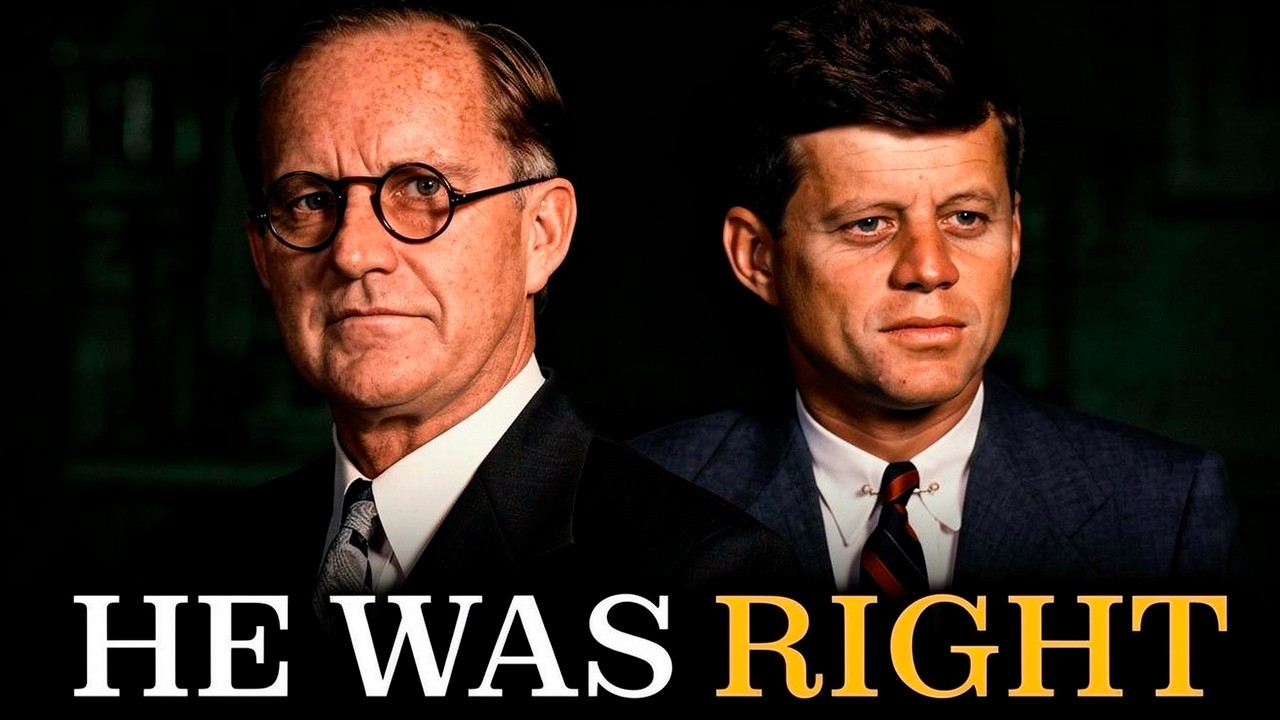
The story begins with tragedy inside the Kennedy family and the sudden death of the son originally expected to enter politics.
Joseph Kennedy Jr., the family’s eldest son, had long been viewed as the brother destined for a major political career.
Those expectations disappeared in August 1944 when Joe Jr. was killed during a dangerous military aviation mission over Europe.
The loss profoundly changed the Kennedy family.
It also changed Jack Kennedy’s future.
John had already returned from his own wartime service carrying the consequences of serious health problems and a badly injured back.
He had achieved national recognition after surviving the destruction of PT-109 and helping members of his crew reach safety.
But politics had not always appeared to be his inevitable destination.
After Joe Jr.’s death, the family’s political ambitions increasingly shifted toward Jack.
By 1946, the twenty-nine-year-old veteran was campaigning for an open congressional seat representing Massachusetts’s heavily Democratic Eleventh District.
Far from attempting to sabotage that campaign, Joseph Kennedy became one of the enormous advantages available to his son.
He supplied money.
He supplied political knowledge.
He supplied professional organization.
And importantly, he understood that his own controversial political reputation meant he should frequently operate away from public view.
Joseph had previously served as Franklin Roosevelt’s ambassador to Britain but became associated with controversial isolationist positions before America entered World War II.
His own prospects for national political office had largely disappeared.
His ambitions increasingly transferred to his children.
Historical accounts therefore describe Joseph working behind the scenes during Jack’s congressional campaign rather than campaigning prominently beside him.
That distinction can easily be distorted.
Remaining publicly distant did not mean Joseph wanted Jack defeated.
It meant the family understood Joseph’s political reputation could become a liability if he appeared to control his son too openly.
Behind the scenes, however, Joseph’s involvement was substantial.
His financial resources gave Jack advantages that competing candidates simply could not match.
Campaign workers blanketed neighborhoods.
Advertising appeared throughout the district.
Mailings promoted Kennedy’s wartime record.
His organization cultivated veterans, working-class voters, neighborhood groups, and local political contacts.
One historical study of the 1946 campaign describes Joseph Kennedy’s financial resources as seemingly almost unlimited.
Former House Speaker Tip O’Neill later estimated that extraordinary sums had been spent during Kennedy’s congressional campaign.
Other people involved in Massachusetts politics similarly remembered Joseph as a central force behind the operation.
Mark Dalton, officially Kennedy’s campaign manager, later characterized Joseph as effectively the campaign’s real manager behind the scenes.
That evidence points in exactly the opposite direction from claims that Joseph secretly financed Jack’s political opponents.
No credible historical evidence establishes that Joseph covertly funneled money to rival candidates intending to engineer his son’s humiliation.
Such behavior would also conflict with the extensive effort Joseph invested in constructing the Kennedy political organization around Jack.
The strategy worked.
Kennedy survived a crowded Democratic primary and subsequently won the general election comfortably.
He entered Congress in January 1947.
Joseph’s involvement did not end there.
As Jack’s political ambitions expanded, the Kennedy family organization expanded with them.
Money remained important, but money alone cannot adequately explain Kennedy’s success.
His campaign emphasized youth, wartime service, accessibility, and a willingness to campaign relentlessly throughout neighborhoods and community organizations.
Kennedy’s sisters also became valuable political assets.
Women associated with the campaign organized social gatherings designed to introduce the young candidate to voters.
These events helped transform Kennedy from a wealthy outsider into a recognizable political personality across the district.
The operation was sophisticated enough to foreshadow techniques the Kennedy organization would later employ on much larger stages.
Joseph understood publicity exceptionally well.
He had accumulated extensive experience in finance, government, entertainment, and public relations long before Jack entered electoral politics.
He recognized that his son’s military record provided an exceptionally powerful political biography after World War II.
Kennedy’s PT-109 story therefore became an important element of his emerging public image.
The family promoted Jack as a young veteran representing a new political generation rather than simply another wealthy Kennedy heir.
Joseph’s money unquestionably facilitated that effort.
But the campaign also depended upon organization and Jack’s willingness to spend enormous amounts of time meeting voters personally.
He attended gatherings constantly.
He shook hands.
He visited neighborhoods.
He appeared before veterans.
He addressed labor groups.
He learned the mechanics of retail politics that would eventually help carry him toward statewide and national office.
There was another remarkable element to this story.
John Kennedy was considerably less healthy than voters realized.
Throughout much of his adult life, Kennedy endured serious medical problems that remained largely concealed from the American public.
His back caused persistent pain.
He suffered digestive problems.
He experienced repeated illnesses and hospitalizations.
Eventually, doctors diagnosed him with Addison’s disease, a dangerous disorder affecting the adrenal glands.
But the timeline is critical.
Kennedy’s major Addison’s diagnosis came after his successful 1946 congressional campaign, not before Joseph supposedly sabotaged that campaign with hidden medical files.
During a 1947 trip to Britain, Congressman Kennedy became seriously ill and collapsed.
Doctors diagnosed a malfunction of his adrenal glands consistent with Addison’s disease.
His condition was extremely serious.
One physician reportedly believed the young congressman might have only a limited time remaining.
Kennedy traveled home under medical supervision.
The family concealed the severity of his condition from the public.
Rather than announcing Addison’s disease, the Kennedys allowed a different explanation involving malaria to circulate.
That concealment would continue in different forms throughout Kennedy’s political career.
The family feared that public knowledge of his chronic illness could destroy his political prospects.
Kennedy himself shared that concern.
American presidential politics during the mid-twentieth century strongly rewarded public displays of physical strength and stamina.
A politician dependent upon medication for a potentially fatal chronic condition risked appearing medically incapable of enduring national office.
Kennedy therefore cultivated an image sharply different from his private medical reality.
Photographs showed the handsome young politician smiling, sailing, campaigning, traveling, and interacting energetically with crowds.
Behind that public image was someone repeatedly experiencing serious pain and potentially dangerous medical complications.
Joseph helped protect that image.
That fact directly undermines the viral claim that Joseph concealed Jack’s medical records because he wanted his son politically destroyed.
The concealment served the opposite purpose.
Keeping Kennedy’s illness private protected his political viability.
There is likewise no credible evidence that Joseph stored Jack’s Addison’s disease files inside a Swiss bank vault as part of a campaign against him.
The Kennedy family certainly maintained substantial financial interests and valued privacy intensely.
But those general facts do not establish the existence of the specific medical-file conspiracy described in sensational online accounts.
The distinction matters because genuine secrecy surrounding Kennedy’s health makes fabricated additions sound unusually believable.
The Kennedys really did conceal serious medical information.
Jack really was much sicker than voters understood.
Joseph really was extraordinarily wealthy.
The family really did possess international financial connections.
Those documented facts can easily be rearranged into a fictional narrative involving Swiss vaults and political betrayal.
Historical evidence supports a considerably different interpretation.
Joseph wanted Jack politically successful.
He invested heavily in making that happen.
He continued supporting his son when Jack eventually moved beyond the House and pursued a United States Senate seat.
The 1952 Senate campaign against Republican incumbent Henry Cabot Lodge Jr. became another demonstration of the Kennedy family organization.
Again, Joseph’s financial resources and strategic involvement provided major advantages.
Jack defeated Lodge.
The victory transformed Kennedy from a young Massachusetts congressman into a politician with genuine national possibilities.
Joseph increasingly envisioned something much larger.
The presidency.
During the following years, Kennedy traveled extensively and cultivated Democratic activists throughout the country.
The family machine became more sophisticated.
Robert Kennedy emerged as an important organizer.
Joseph continued using his relationships, resources, and strategic instincts from behind the scenes.
Meanwhile, Jack’s health remained dangerous.
His Addison’s disease complicated other medical treatments.
His severe back problems ultimately led him toward risky surgery.
At one point his condition became so serious that he received the Catholic Church’s last rites.
Joseph reportedly told a friend that his son was dying.
Jack survived again.
The family continued protecting the full extent of his medical history from public scrutiny.
That secrecy would eventually become politically important when Kennedy pursued the presidency in 1960.
Questions concerning his health surfaced repeatedly.
The Kennedy operation worked aggressively to reassure journalists and voters that the candidate possessed the physical capacity required for the presidency.
Once again, this behavior reflected political protection rather than Joseph attempting to expose or destroy his son.
The family’s treatment of medical information nevertheless raises legitimate historical questions about transparency.
Voters evaluating a presidential candidate arguably had an interest in knowing about a serious chronic illness requiring continuing medication.
The Kennedy campaign chose instead to emphasize vitality and minimize the seriousness of Jack’s medical problems.
Historians have subsequently documented much more about those conditions.
That genuine story is significant without inventing a secret Swiss vault.
The alleged 1946 diary presents another major evidentiary problem.
No authenticated newly unsealed Joseph Kennedy diary matching the sensational description has been established by the historical sources reviewed for this account.
There is therefore no verified handwritten mandate demonstrating Joseph instructed attorneys to sabotage Jack’s career during the congressional campaign.
A genuine diary of that significance would require provenance.
Researchers would need to know where it had been preserved.
They would need to know when it became available.
They would need authentication of Joseph’s handwriting.
They would need archival catalog information and access to surrounding entries providing context.
One sensational photograph of a supposed diary page would not establish authenticity.
Historical documents become convincing when their origins can be reconstructed independently.
The Kennedy family has been studied intensely for generations.
Joseph Kennedy alone has been the subject of biographies, archival research, government records, correspondence collections, and extensive historical investigation.
Jack’s first congressional campaign has likewise received detailed scholarly attention.
Researchers have interviewed campaign participants.
They have examined financial advantages.
They have studied political strategy.
They have reconstructed the family’s involvement.
The broad conclusion remains consistent.
Joseph helped Jack win.
That does not mean father and son always enjoyed an uncomplicated relationship.
Joseph was demanding.
He expected extraordinary achievement from his children.
His ambitions placed enormous pressure upon the family.
The death of Joe Jr. altered the expectations surrounding Jack dramatically.
The surviving second son inherited not simply political opportunities but a family expectation of accomplishment.
Jack could also resist his father.
Their political views were not identical.
Their personalities differed substantially.
Their relationship evolved as Jack developed his own political identity and became increasingly independent.
By the time Kennedy reached the presidency, Joseph could advise but could not simply dictate his son’s decisions.
Still, none of that provides evidence for a secret campaign by Joseph to ensure Jack lost his first election.
If anything, the 1946 campaign demonstrates how effectively Joseph could deploy money and organization on behalf of his son.
Some contemporaries believed those advantages were excessive.
Kennedy’s rivals could hardly compete financially with one of America’s wealthiest families.
That criticism became part of the Kennedy political story for decades.
Joseph supposedly joked about the enormous amounts required to elect his son.
Whether every colorful quotation attributed to him is exact remains another question for historians.
But nobody seriously studying the campaign can ignore the father’s financial influence.
The irony is striking.
The real controversy surrounding Joseph Kennedy was not that he secretly tried to make Jack lose.
It was that he may have done extraordinarily much to help Jack win.
Money purchased advertising.
Money supported organization.
Money allowed extensive campaigning.
Money provided access to professional expertise unavailable to ordinary congressional candidates.
The Kennedy name provided additional advantages.
Jack’s wartime reputation added another.
But Jack still had to persuade voters.
He did.
The Democratic primary presented the major challenge because victory there effectively determined the outcome within the heavily Democratic district.
Kennedy ultimately emerged from the crowded field.
He then won the general election overwhelmingly.
The victory began a political career that would move remarkably quickly.
Six years later came the Senate.
Eight years after that came the presidency.
Joseph lived to see his second son accomplish the ambition the father himself had never achieved.
John F. Kennedy became president of the United States.
Joseph suffered a massive stroke shortly afterward.
The stroke left him largely unable to speak but mentally aware of events surrounding his family.
He subsequently witnessed devastating tragedy.
President Kennedy was assassinated in Dallas in November 1963.
Robert Kennedy was assassinated while campaigning for president in 1968.
Joseph died the following year.
The patriarch who had built one of America’s most powerful political families ultimately outlived several of his children.
His relationship with Jack remains a fascinating subject precisely because ambition, affection, pressure, wealth, politics, and family expectations became inseparable.
There are legitimate criticisms to examine.
Joseph’s political influence deserves scrutiny.
The enormous campaign spending deserves scrutiny.
The Kennedy family’s concealment of Jack’s health deserves scrutiny.
Joseph’s controversial political record before his son’s rise deserves scrutiny.
None requires an invented betrayal.
The historical evidence points toward a father attempting to create political opportunities for his son, not secretly financing his destruction.
Kennedy’s medical history was concealed because the family feared disclosure would damage him politically.
His Addison’s disease was genuinely serious.
But the crucial diagnosis occurred after his 1946 election.
That chronology alone creates a fundamental problem for claims that Joseph weaponized those medical records to sabotage the congressional campaign.
The supposed Swiss bank vault adds dramatic imagery but currently lacks credible documentary support.
The alleged payments to Kennedy’s political opponents similarly contradict what is known about Joseph’s involvement in the campaign.
And the supposedly newly unsealed 1946 diary has not been authenticated as the explosive historical discovery described online.
If such documents ever genuinely emerge, historians will examine them carefully.
Archives can absolutely transform our understanding of famous political families.
Private correspondence can reveal motives that public statements concealed.
Diaries can contradict decades of conventional interpretation.
Financial records can uncover relationships previously invisible to historians.
But evidence must come first.
For now, the surviving historical record tells a very different story.
After Joe Jr. died, Jack became the Kennedy son carrying much of the family’s political ambition.
Joseph invested money, influence, experience, and organizational power behind his campaign.
Jack won.
When serious illness subsequently threatened his career, the family concealed rather than publicized the diagnosis.
Years later, Joseph again helped build the political machinery supporting Jack’s Senate and presidential campaigns.
The real Kennedy family story contains ambition powerful enough to reshape American politics and secrecy substantial enough to remain controversial decades later.
But the evidence does not currently support the dramatic claim that Joseph Kennedy secretly tried to destroy JFK’s first campaign.
The better-supported historical question is almost the reverse.
How much of John F. Kennedy’s extraordinary political rise would have been possible without the enormous resources and relentless ambition of his father?


