Christa Pike Walks Again After Failed Execution, but Lawyers Warn of Possible Lasting Brain Damage
Christa Pike is walking with assistance just weeks after surviving Tennessee’s failed attempt to execute her, marking a significant development in her physical recovery. But while her ability to eat, breathe independently, and move again offers some encouragement, her attorneys say serious concerns remain about her memory and concentration.
According to her legal team, Pike is not yet cognitively back to normal. During conversations, she has reportedly struggled to follow her own train of thought, raising questions about whether the September 30 execution attempt caused lasting neurological damage. Doctors have reportedly warned that it could take months to determine the full extent of any cognitive injuries.
The latest update presents a complicated picture. Pike has made visible physical progress after spending days unconscious and dependent on a ventilator. Yet her recovery is far from complete, and the long-term effects of what happened inside Tennessee’s execution chamber remain uncertain.
The execution attempt took place at Riverbend Maximum Security Institution in Nashville on September 30. Officials administered two doses of pentobarbital, the drug intended to carry out her death sentence, but the procedure did not result in her death. Pike was transferred to a hospital in critical condition and required emergency medical treatment.
In the days that followed, reports from her attorneys described a patient whose survival was uncertain. She remained unconscious, required mechanical ventilation, and suffered serious injuries to her arms. Her legal team also reported concerns involving pneumonia and a blood clot. At that stage, there was considerable uncertainty about whether she would survive her hospitalization, much less regain the ability to communicate or move independently.
A major change came on October 6, when her attorneys announced that Pike had regained consciousness. She was able to communicate, although she remained confused and was not functioning normally. The development offered some hope after several days of uncertainty, but it did not mean that the danger had passed.
By October 8 and 9, the reports had become more encouraging. Her attorneys described her physical recovery as remarkable, saying she had begun walking with assistance and was eating regular meals. Her breathing had improved, and she no longer required the ventilator that had supported her during the most critical stage of her hospitalization.
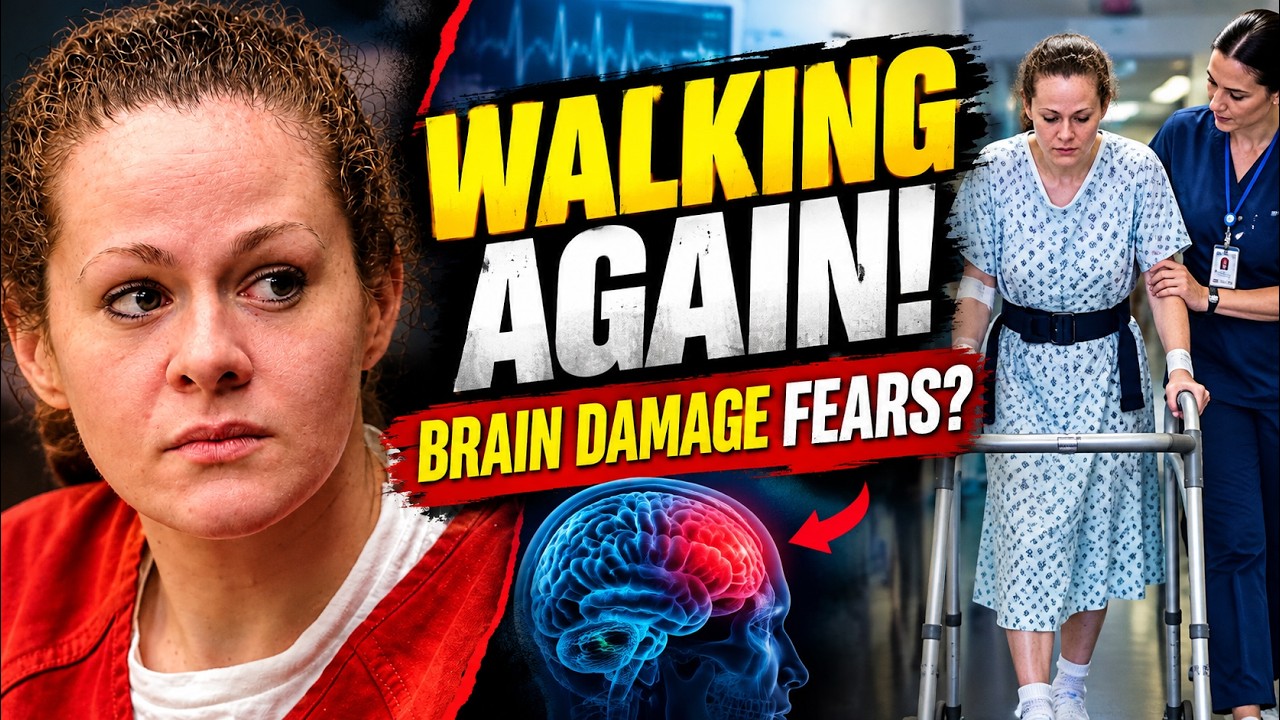
Those milestones represent a substantial change from the condition described immediately after the failed execution. However, physical improvement does not necessarily mean that every injury has healed. Nor does the ability to walk establish that the brain has fully recovered.
That distinction has become central to the latest update. Attorney Steven Ferrell has reportedly said Pike continues to experience problems with memory and concentration. Her lawyers have described difficulties maintaining a train of thought during conversations, raising concerns about her ability to return to her previous cognitive functioning.
Her attorneys have expressed fears about possible lasting brain damage, but no publicly established diagnosis has confirmed that she has permanent cognitive injuries. The available information does not establish that doctors have reached such a conclusion. Instead, the medical outlook remains uncertain, with further assessments and time needed before the long-term consequences can be determined.
For Pike, the questions now extend well beyond her next few days in hospital. Will her concentration continue to improve? Will she regain her previous ability to follow conversations and communicate without difficulty? Will the confusion gradually disappear, or will some problems remain?
Those questions cannot yet be answered. Walking again and eating normally are encouraging signs, but they do not provide a complete picture of her neurological condition.
The severity of Pike’s physical injuries also remains an important part of the case. Her attorneys have described burns, blistering, swelling, and tissue damage around the injection sites in her arms. They have said the pain has interfered with ordinary activities, including holding a pen and signing her name.
According to her legal team, the injuries followed repeated attempts to establish intravenous access during the execution procedure. Her attorneys have pointed to a blood disorder and difficulties with her veins as possible factors that complicated the process. However, the precise cause of the failed execution has not been conclusively established in the public information available.
Medical experts have discussed possible explanations involving the placement of intravenous lines, the condition of Pike’s veins, and whether the drug may have entered surrounding tissue rather than being delivered properly into the bloodstream. These possibilities require further examination and should not be treated as established findings.
The injuries themselves and the reasons they occurred are separate questions. Pike’s lawyers have described the damage to her arms, but investigators will need evidence to determine exactly how the execution team administered the drug, what happened during the procedure, and whether mistakes contributed to the outcome.
The central question remains: how did Pike survive two doses of an execution drug?
The Associated Press has reported that experts have considered several possible explanations, including problems with intravenous access and the way the medication was delivered. Pike’s reported medical circumstances may have made it more difficult to establish a functioning IV line. If a drug intended to enter the bloodstream instead enters surrounding tissue, its effects may differ from those expected. But that possibility does not prove that it happened in Pike’s case.
The quality and handling of the medication have also been raised as matters that may require scrutiny. At present, no single explanation for the failure has been publicly established.
Another issue concerns Tennessee’s execution protocol. The procedure provides for a second dose of pentobarbital if the first dose does not result in death. However, reporting on the protocol indicates that it does not clearly explain what officials should do if a person survives the second dose.
That raises difficult questions about the preparation and response required when an execution does not produce the expected result. What was the execution team required to do after the second dose failed? What did witnesses observe? What medical assessments were made, and what records can establish how the medication was administered?
Those questions require evidence rather than speculation. Medical records, execution-related materials, photographs, recordings, communications, and testimony may help investigators reconstruct the sequence of events.
Tennessee Governor Bill Lee paused the state’s remaining scheduled executions for 2026 and ordered an independent review of the incident. A judge also ordered officials to preserve evidence connected to the September 30 procedure.
The preservation order is significant because it is intended to ensure that relevant material remains available for examination. Pike’s attorneys have sought information about what happened, and the investigation will need to establish whether the execution protocol was followed and whether failures in preparation, equipment, drug administration, or the response to complications contributed to the outcome.
The review could have consequences beyond Pike’s individual case. If investigators identify failures supported by the evidence, their findings may influence how Tennessee prepares for and conducts future executions. But the review has not yet provided a definitive public explanation for why the procedure failed.
There is also no confirmed new execution date for Pike. Her death sentence remains in effect, but it is unclear whether or when the state might attempt another execution. For now, her immediate medical recovery and the investigation into the failed procedure remain the central developments.
Her attorneys have described another dimension of the ordeal: profound psychological trauma. Pike entered the execution process expecting it to end her life. Instead, she survived the procedure, was transferred for emergency treatment, and spent days unconscious before regaining consciousness in hospital.
Her lawyers have spoken about the pain and psychological effects associated with the experience. However, the full extent and duration of that trauma cannot be determined from public statements alone. Psychological recovery, like cognitive recovery, cannot be measured simply by observing whether someone can walk or speak.
The latest physical progress therefore does not mean that the ordeal is over. Pike may still face further treatment, medical assessments, and legal proceedings while her attorneys seek answers about what happened.
The case also remains deeply connected to the family of Colleen Slemmer, whom Pike was convicted of murdering in 1995. The execution attempt was intended to carry out the death sentence imposed for that crime, and Slemmer’s family has a profound interest in the outcome.
Following Pike’s survival, her attorney said she had expressed concern for Slemmer’s family. But May Martinez, Slemmer’s mother, has challenged suggestions that Pike’s reported feelings amount to genuine remorse. Martinez has said Pike never apologized and has continued to support the execution.
Her position reflects the perspective of a mother who has lived with the loss of her daughter for decades. The failed execution did not erase that loss or resolve the family’s desire for justice.
It is important to distinguish between what Pike’s attorneys have reported about her statements and what Martinez has said about her own experience. The public accounts do not establish a shared understanding between the two sides. Pike’s medical recovery does not change her conviction or the sentence, and the failure of the execution does not settle the family’s grief.
The case now involves several questions that are connected but not identical. Investigators must determine what happened during the execution and whether the procedure was carried out according to protocol. Medical assessments must establish the extent of Pike’s injuries and whether they will have lasting effects. The legal consequences of the failed execution also remain uncertain.
For Pike, the immediate concern is whether she can continue recovering. For Slemmer’s family, the failed procedure has added another painful chapter to a case that began in 1995. For Tennessee, the investigation must explain how an execution intended to end a prisoner’s life instead left her alive, critically injured, and in need of emergency treatment.
As of the latest reports, Pike has made meaningful physical progress. She is walking with assistance, eating regular meals, and breathing without a ventilator after several days of critical illness. But her attorneys continue to report cognitive difficulties, and doctors have warned that it may take months to determine whether lasting damage has occurred.
It would be premature to say that Pike has fully recovered. It would also be premature to declare that she has permanent brain damage. Neither conclusion is established by the information currently available.
The most accurate picture is more complicated: a woman who survived two doses of an execution drug has recovered enough to begin walking again, but still faces uncertain medical consequences. Her physical progress is significant, yet the questions about her memory, concentration, arm injuries, and psychological condition remain unresolved.
Further medical assessments may eventually clarify the extent of her injuries. The state’s independent review may explain why the execution failed, while the courts may face additional questions about the legal consequences. Until those developments occur, the full impact of September 30 will remain unknown.
Christa Pike’s return to walking has changed the immediate picture of her condition. The woman who was once unconscious and dependent on a ventilator is now making visible progress. But the most troubling uncertainty may be the one that cannot be seen.
Her lawyers say she is still struggling cognitively. The possibility of lasting brain damage has been raised, but it has not been conclusively established. And while doctors need more time to understand what the failed execution may mean for her long-term health, Tennessee must still answer how a procedure involving two doses of pentobarbital ended without her death.
For now, the facts are clear in some respects and uncertain in others. Pike is walking again. Her attorneys report continuing cognitive concerns. Permanent brain damage has not been confirmed, and the circumstances of the failed execution remain under review.
Her recovery is an important development, but it is not the end of the story. The next months may reveal whether her physical progress is accompanied by a return of her cognitive abilities, while the investigation may eventually provide answers about what went wrong inside the execution chamber.


