There is no credible evidence that Ron Howard released a secret 1970s studio ledger identifying six supposedly corrupt Golden Age actors.
No authenticated recording has emerged showing a legendary actor ordering a fixer to destroy an actress who rejected his advances.
The circulating narrative instead combines recognizable Hollywood history with extraordinary allegations that currently lack verifiable documents, recordings, or named sources.
That distinction is especially important because the claims accuse identifiable historical entertainers of serious financial misconduct and potentially criminal behavior.
Ron Howard has spent more than six decades working inside Hollywood as an actor, director, producer, and prominent industry figure.
His unusual career gives any story connecting him with supposedly hidden studio history an immediate appearance of credibility and insider authority.
Howard entered television as a child before becoming widely recognized through “The Andy Griffith Show” during the early 1960s.
He later became one of American television’s most familiar young performers through his starring role on “Happy Days.”
Howard subsequently developed an acclaimed directing career spanning comedy, drama, historical filmmaking, documentaries, and major studio productions.
That biography places him unusually close to several generations of Hollywood history, but proximity alone cannot authenticate alleged secret evidence.
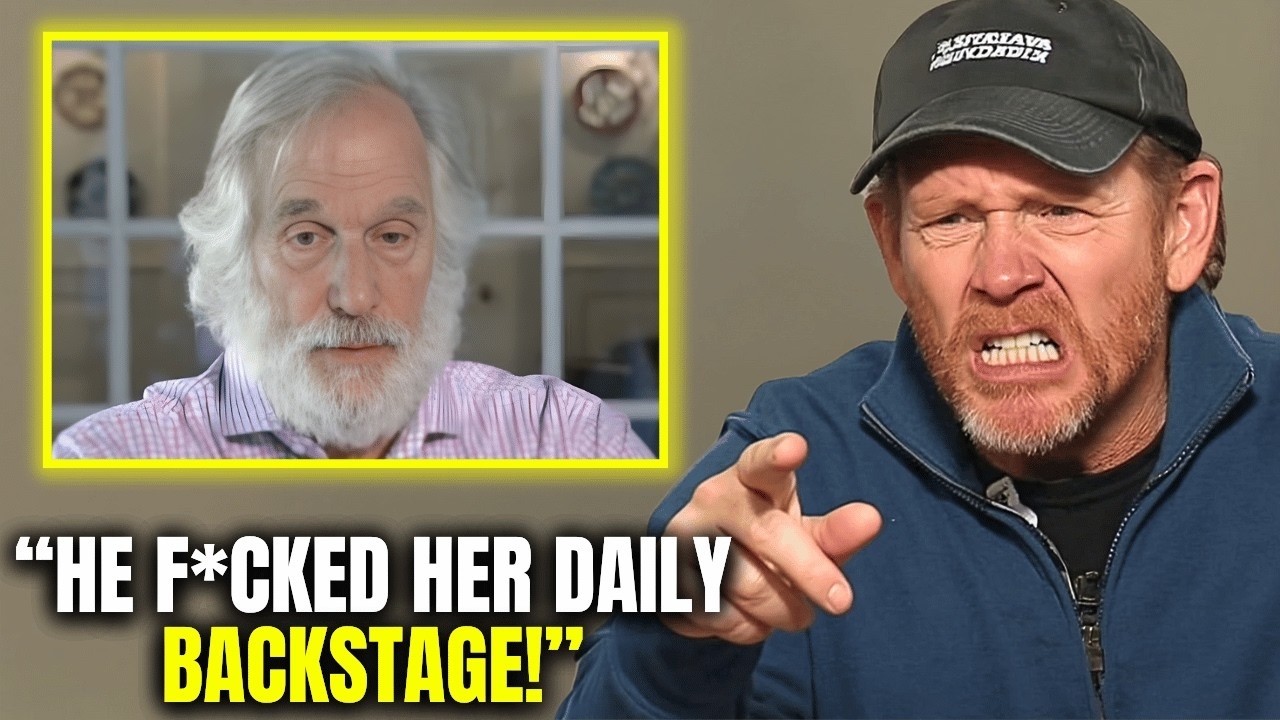
The specific viral story claims Howard bypassed his publicists and unexpectedly released a previously locked studio ledger from the 1970s.
It further alleges the documents identify six major Golden Age actors as participants in systematic financial and personal misconduct.
Yet credible reporting currently provides no authenticated ledger, archival catalog number, studio provenance, or documentary chain of custody.
Those omissions are particularly significant because a genuine fifty-year-old studio document should normally possess multiple independently verifiable identifying characteristics.
Researchers would expect to know which studio created the ledger, who maintained it, and how Howard supposedly obtained possession.
They would also expect dates, production references, accounting codes, signatures, correspondence, contracts, or other materials corroborating its alleged contents.
None of those basic evidentiary elements accompanies the sensational narrative now being presented as an explosive Hollywood historical revelation.
The claim involving stolen royalties requires especially strong evidence because studio compensation systems produced extensive contracts and financial documentation historically.
Actors, agents, studios, guilds, attorneys, accountants, and distributors generated records concerning salaries, residuals, profit participation, and contractual obligations.
A systematic operation involving forged signatures would potentially create discrepancies across several independently maintained collections rather than one mysterious ledger.
The allegations become even more extraordinary when the narrative claims actors personally forged legal signatures to steal colleagues’ royalty payments.
Such conduct would potentially implicate fraud, forgery, contractual violations, tax consequences, and litigation involving several parties and financial institutions.
Establishing something that serious requires substantially more than an unidentified document attributed vaguely to an unnamed Hollywood studio.
The alleged campaign against young actresses raises still greater evidentiary concerns because it introduces another category of serious misconduct.
The viral story claims prominent actors hired private investigators specifically to bankrupt actresses who rejected their sexual or romantic advances.
Again, no names, case files, investigative records, payment documentation, court proceedings, or authenticated correspondence accompany the accusation as presented.
Hollywood unquestionably has a documented history of powerful figures exploiting performers and attempting to control damaging information about themselves.
Studios also exercised extraordinary authority over contracted performers during the classical studio era, including carefully managing stars’ public images.
Those realities can make a fabricated story involving secret fixers and suppressed scandals sound historically plausible to modern audiences.
But documented institutional misconduct cannot serve as evidence that a different, highly specific conspiracy involving unnamed actors actually occurred.
This distinction becomes essential whenever broad historical truths are used to make unsupported individual allegations appear automatically credible.
Classical Hollywood operated through vertically integrated studios that could exert enormous influence over performers working under restrictive long-term contracts.
Powerful executives frequently attempted to control publicity surrounding stars because personal scandals could threaten valuable films and carefully constructed screen personas.
Studios cultivated relationships with journalists, publicists, attorneys, physicians, law enforcement contacts, and other professionals capable of containing damaging stories.
Modern historical research has documented numerous examples of exploitation, coercive professional relationships, discrimination, and manipulation throughout Hollywood’s history.
Yet those genuine practices do not authenticate every modern internet story involving secret recordings, hidden ledgers, or celebrity conspiracies.
The alleged Howard recording presents an even clearer verification problem because an audio tape should theoretically be independently examinable.
Authenticating historical audio requires considerably more than listeners deciding that a recorded voice resembles a famous deceased actor.
Investigators would need the original recording or reliable provenance connecting copies directly to the alleged historical source.
Experts could examine recording technology, tape characteristics, editing artifacts, background acoustics, speech patterns, and documented circumstances surrounding the conversation.
Researchers would additionally seek corroborating records establishing that the people supposedly speaking were actually together when recording allegedly occurred.
Without those safeguards, an alleged vintage recording could be misidentified, edited, reenacted, synthetically generated, or entirely fabricated.
That risk has increased substantially because modern generative technology can reproduce convincing approximations of famous voices at relatively low cost.
A dramatic recording appearing online therefore requires more authentication today than similar material might have required during earlier media eras.
The claim that Howard personally “leaked” such audio should likewise generate evidence outside the recording itself if genuinely accurate.
One would expect an announcement, interview, verified social-media publication, representative statement, documentary project, publisher disclosure, or established news report.
An extraordinary disclosure involving six major Hollywood figures would almost certainly generate immediate attention across American entertainment and national media.
Attorneys representing estates could respond, studios might investigate archives, historians would seek documents, and entertainment journalists would pursue authentication.
Instead, the viral framing relies heavily upon urgency rather than supplying the basic information required for independent verification.
Readers are instructed to access supposedly explosive evidence immediately because Hollywood estates allegedly intend to remove it from circulation.
That rhetorical structure appears frequently in engagement-driven misinformation because it discourages readers from stopping to verify underlying evidence.
“Watch before they delete it” converts an absence of durable evidence into supposed proof that powerful organizations are concealing something.
If material subsequently disappears, disappearance becomes evidence of conspiracy; if it remains online, continued availability rarely receives equivalent attention.
That creates an unfalsifiable narrative in which virtually every possible development can be interpreted as confirming the original allegation.
Genuine investigative journalism operates differently because documents become more valuable when readers and independent journalists can examine them repeatedly.
Reporters normally preserve original materials, explain provenance, obtain responses, consult specialists, and identify corroborating evidence wherever legally possible.
A legitimate historical investigation would therefore benefit from making the supposed ledger independently verifiable rather than threatening its imminent disappearance.
The same applies to claims that Hollywood has entered an “industry blackout” following Howard’s supposed disclosure of these documents.
Silence cannot independently establish suppression, particularly when there is no verified underlying event requiring entertainment companies to respond.
Before interpreting an absence of coverage as conspiracy, investigators must first establish that a genuine disclosure actually occurred.
No such evidentiary foundation accompanies the story as presented, leaving the supposed blackout dependent upon the original unsupported claim.
Ron Howard’s documented public career also makes the alleged disclosure noteworthy because he frequently discusses Hollywood history openly.
He has participated in interviews, retrospectives, documentaries, podcasts, award ceremonies, and discussions about filmmaking throughout his directing career.
Howard has also spoken publicly about working with celebrated performers and navigating Hollywood after beginning professionally as a young child.
That extensive public record would provide journalists abundant material for establishing whether his alleged new disclosure represented a major departure.
A supposed decision to expose criminal behavior by six celebrated actors would be dramatically different from ordinary historical reminiscence.
Such an intervention would potentially involve lawyers, estates, archives, journalists, studios, historians, and possibly law-enforcement questions concerning documentary authenticity.
Consequently, reliable confirmation should appear through multiple independent channels rather than exclusively through sensational social-media captions promising secret evidence.
The story also contains an important chronological ambiguity involving its characterization of “Hollywood’s Golden Age” and a 1970s ledger.
Hollywood’s classical studio era is generally associated with earlier decades, particularly from the late 1920s through the 1950s.
Many major Golden Age performers certainly remained active during the 1960s and 1970s, sometimes retaining considerable industry influence.
But describing a 1970s ledger as straightforwardly documenting Golden Age studio corruption requires explaining precisely what period those records actually cover.
Does the alleged ledger describe events contemporaneous with its creation, or does it retrospectively document conduct from previous decades?
Who supposedly compiled the information, and why would a studio maintain written records explicitly cataloging criminal misconduct by valuable performers?
Why would such evidence survive fifty years while apparently generating no trace across biographies, litigation, archival scholarship, or investigative reporting?
Those are elementary questions that credible historical research would attempt to answer before publishing allegations against identifiable individuals.
Hollywood accounting itself has generated legitimate controversy for decades, making fabricated royalty stories particularly effective because audiences recognize the underlying issue.
Actors, writers, directors, and producers have repeatedly disputed studio accounting practices and definitions governing whether films technically generated contractual profits.
The phrase “Hollywood accounting” became shorthand for complicated accounting structures capable of producing surprising financial outcomes for successful productions.
Numerous entertainment-industry disputes have therefore involved compensation, residuals, participation arrangements, licensing revenue, and contested contractual calculations.
But those documented commercial disputes differ fundamentally from allegations that famous actors personally forged signatures to steal colleagues’ royalties.
One involves contractual structures and accounting methodologies that can be examined through identifiable lawsuits, agreements, and financial records.
The other alleges intentional criminal conduct by unnamed individuals without currently supplying the documents necessary to establish that accusation.
Combining those two categories creates another mechanism through which sensational misinformation can borrow credibility from genuine Hollywood controversies.
Private investigators similarly have a genuine historical connection with Hollywood, publicity management, litigation, security, and celebrity scandal containment.
That fact makes the alleged campaign against young actresses sound possible without demonstrating that the specific campaign actually happened.
Investigative evidence would require identifying who hired investigators, which investigators participated, which actresses were targeted, and what actions followed.
Financial destruction would presumably leave additional traces involving lawsuits, employers, creditors, banks, contracts, property, or professional representation.
A coordinated effort targeting multiple actresses would potentially generate patterns visible across memoirs, correspondence, legal records, or contemporary reporting.
Without such corroboration, the allegation remains unsupported regardless of how accurately its broader atmosphere resembles Hollywood’s documented power structures.
The supposed dressing-room cassette creates similar problems because its location and recording circumstances are not identified in the viral narrative.
Which dressing room was recorded, during which production, inside which studio, and on precisely what date?
Who operated the recording equipment, why was the conversation recorded, and how did the tape survive until Howard allegedly obtained it?
Who possesses the original recording now, and has any independent audio specialist examined the physical media or digital transfer?
Those questions may sound technical, but they separate genuine historical discoveries from compelling stories constructed around supposedly inaccessible evidence.
Authentic archival discoveries frequently become stronger under scrutiny because researchers can connect one artifact with numerous independently surviving records.
A studio production file might correspond with call sheets, contracts, accounting records, correspondence, publicity materials, photographs, and union documentation.
An alleged conspiracy ledger capable of naming six major stars should similarly intersect with substantial quantities of existing historical material.
The absence of those connections does not mathematically prove fabrication, but it substantially limits what can responsibly be claimed publicly.
The reputations of deceased public figures require careful treatment even when they cannot personally challenge accusations made decades after death.
Historical journalism can absolutely document wrongdoing by celebrated entertainers when evidence supports conclusions, regardless of their cultural importance or popularity.
But famous names should not become interchangeable villains inserted into stories because they attract clicks and cannot answer allegations themselves.
The same evidentiary principles should apply whether allegations concern beloved actors, controversial executives, powerful producers, or forgotten studio employees.
Contemporary cultural reassessments have demonstrated that Hollywood institutions sometimes protected powerful individuals while marginalized people struggled to receive serious attention.
That historical lesson supports rigorous investigation rather than lowering evidentiary standards for allegations that happen to fit familiar narratives.
Indeed, genuine survivors and documented victims can be undermined when fabricated celebrity scandals become indistinguishable from carefully investigated historical misconduct.
Readers exposed repeatedly to invented revelations may eventually become more skeptical when credible allegations supported by substantial evidence actually emerge.
That makes responsible verification particularly important when stories involve sexual coercion, financial abuse, retaliation, or institutional protection of powerful individuals.
The Howard narrative also appears designed around a familiar online storytelling architecture increasingly common across celebrity-focused social-media content.
First comes an authoritative celebrity supposedly breaking ranks with an industry that protected powerful insiders for generations.
Next comes a physical artifact providing absolute proof: a ledger, cassette, letter, diary, photograph, contract, or secret recording.
Then the artifact reveals wrongdoing more extreme than ordinary scandal, escalating the emotional stakes through criminal or abusive conduct.
Finally comes an urgent warning that lawyers, estates, studios, archives, or government officials are about to erase everything.
The reader is encouraged to click immediately rather than investigate because delay supposedly risks losing access to historical truth forever.
That structure is exceptionally effective for engagement because every component creates curiosity while simultaneously discouraging normal evidentiary skepticism.
But storytelling effectiveness should never be confused with factual reliability, particularly when reputational accusations are being presented as proven crimes.
The strongest evidence currently available regarding this particular narrative is actually what remains missing from the public account.
There is no authenticated 1970s studio ledger publicly connected to Howard containing the alleged list of six corrupt actors.
There is no reliably authenticated dressing-room recording publicly establishing the alleged conversation between a leading man and his supposed fixer.
There is no documented statement from Howard explaining that he bypassed representatives to release either item directly to the public.
There is no substantiated evidence establishing that Hollywood estates are attempting to remove authentic versions of these materials from circulation.
And there is no evidentiary basis for confidently asserting that six unspecified Golden Age actors committed the crimes described.
Those conclusions could change if genuine documentation emerges, because historical understanding appropriately evolves when credible new evidence becomes available.
A newly discovered archive can transform biographies, clarify unresolved events, contradict established narratives, and expose conduct previously concealed from historians.
But extraordinary archival discoveries still require authentication before their contents become accepted additions to the historical record.
If the supposed Howard materials eventually surface, researchers should begin by examining provenance rather than immediately accepting sensational interpretations.
For the ledger, investigators should identify the originating studio, date range, handwriting, paper, accounting conventions, signatures, and archival history.
For the cassette, specialists should examine recording format, physical age, edits, duplication history, voices, and contextual sounds.
Journalists should independently identify the alleged victims and determine whether financial or legal records corroborate the conduct described within documents.
Howard or his representatives should be asked directly whether he possessed, authenticated, released, or authorized distribution of the materials.
The estates of accused individuals should receive opportunities to respond once identifiable allegations and supporting evidence actually exist.
Only after those basic steps could responsible reporting begin determining what the documents genuinely establish about Hollywood history.
Until then, describing unnamed entertainment legends as proven thieves and retaliatory predators would turn an unverified internet narrative into defamatory certainty.
Hollywood’s genuine history contains enough documented exploitation, accounting disputes, coercive power relationships, and institutional secrecy to sustain serious investigation.
Ron Howard’s remarkable career likewise offers substantial material for examining how the American entertainment industry transformed across several generations.
Neither subject benefits when unsupported allegations are packaged as secret history and distributed through invented promises of disappearing evidence.
A legitimate archival revelation becomes stronger when independent researchers can preserve it, inspect it, challenge it, and corroborate its contents.
Evidence that exists only behind an urgent click and supposedly vanishes whenever verification approaches deserves substantially greater skepticism.
The alleged Howard ledger currently fails that basic test because neither its provenance nor its existence has been reliably demonstrated.
The supposed cassette fails the same test because no authenticated recording matching the viral description has been established publicly.
The allegations against the six unnamed actors therefore remain unsupported rather than documented revelations about Hollywood’s classical era.
Future evidence could alter that assessment, but historical journalism cannot responsibly substitute cinematic detail for evidence that has not surfaced.
For now, the real mystery is not what six Hollywood icons supposedly concealed inside a fifty-year-old ledger.
It is why an extraordinary story promising definitive documentary proof currently provides no verifiable ledger, cassette, names, or archival provenance.


