A forgotten photograph can challenge a familiar historical narrative without revealing anything extraordinary at first glance.
Sometimes the most revealing details are ordinary faces, crowded streets, unfamiliar clothing, and overlooked human expressions.
These images preserve fragments of everyday existence that traditional histories frequently overlook while emphasizing celebrated individuals.
They also raise a fascinating question about whose experiences become history and whose stories disappear from public memory.
Historical photography offers something written accounts cannot always provide: a direct visual encounter with an earlier world.
Yet every photograph represents a particular moment, selected viewpoint, and collection of circumstances that demand careful interpretation.
The apparent simplicity of an old image can conceal complicated relationships involving power, identity, technology, and memory.
Understanding those relationships can transform historical photographs from nostalgic decorations into valuable evidence about human experience.
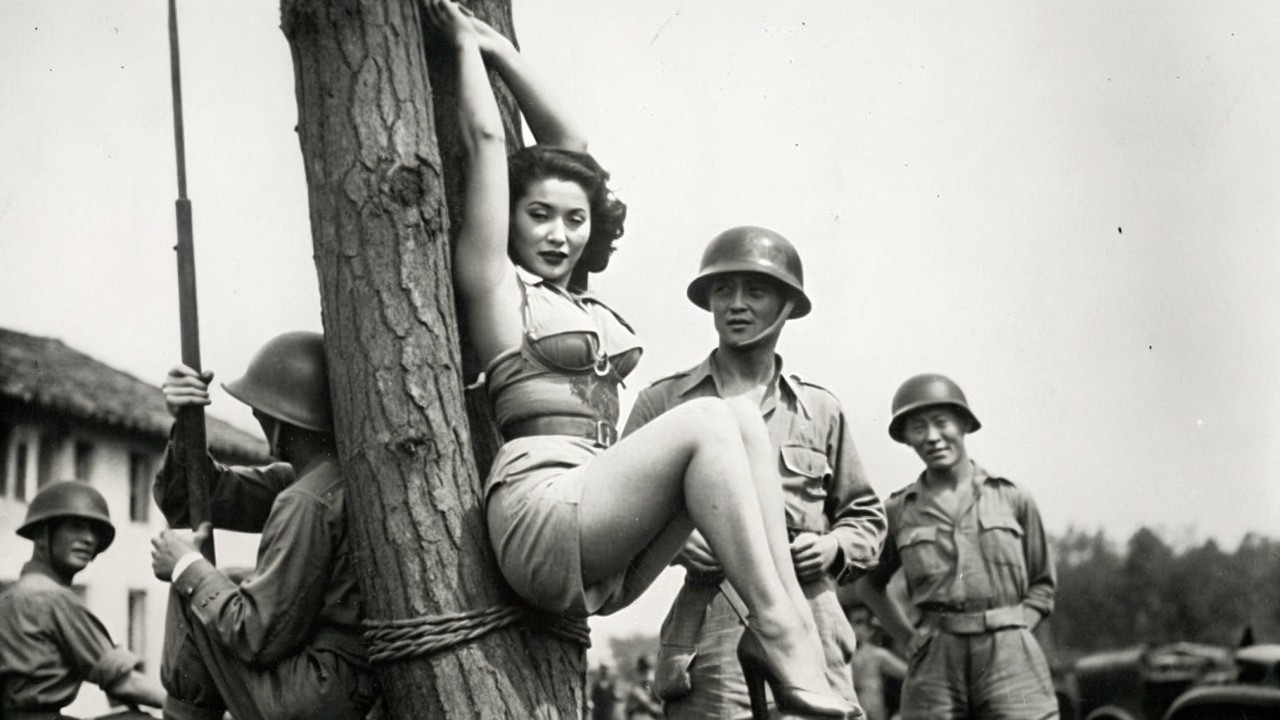
The fascination surrounding rare photographs begins with their extraordinary ability to make distant generations appear unexpectedly familiar.
A stranger photographed a century ago might resemble someone standing beside us on a crowded sidewalk today.
Their clothing may seem unfamiliar, but their expressions often suggest recognizable emotions, personal concerns, and ordinary experiences.
That connection can make historical events feel less abstract and remind viewers that real individuals experienced them.
However, photographs rarely explain themselves, and their emotional immediacy sometimes creates misleading impressions about the past.
A powerful image can inspire curiosity while leaving important questions about its circumstances unanswered or entirely invisible.
The challenge is discovering what photographs reveal, what they conceal, and why those distinctions matter historically.
Photography began transforming visual documentation during the nineteenth century, although its development involved numerous experiments and competing techniques.
Before photographic processes became practical, historical portraits depended largely upon painters, engravers, illustrators, and other visual artists.
Those representations could preserve valuable information, but artistic interpretation inevitably influenced the appearance of people and places.
Early photographic experiments introduced new possibilities for recording visible details through chemical reactions involving light and sensitive materials.
In 1839, the public announcement of the daguerreotype helped accelerate photography’s emergence as an influential visual medium.
Louis Daguerre’s process produced remarkably detailed images, although exposure requirements and production methods imposed substantial practical limitations.
Early photographers often needed specialized equipment, careful preparation, and considerable resources to create a single successful image.
These obstacles influenced who appeared in photographs and which places received attention during photography’s earliest decades.
Wealthier individuals generally enjoyed greater opportunities to commission portraits, leaving uneven visual records of different social groups.
Consequently, surviving collections cannot automatically represent the entire population of a particular community or historical period.
The people most visible in early photographic archives were not necessarily the people most representative of society.
This imbalance remains one of the most important considerations when interpreting photographs as evidence of historical life.
As photographic technology developed, cameras gradually became more portable, accessible, and capable of recording varied environments.
Improved processes reduced exposure times and allowed photographers to work beyond carefully arranged studios and controlled conditions.
Street scenes, industrial workplaces, family gatherings, and public celebrations increasingly entered the expanding world of photographic documentation.
These developments helped preserve visual evidence that earlier generations might have considered too ordinary to record.
The historical importance of everyday photographs becomes particularly clear when examining the transformation of American cities.
Urban expansion reshaped housing, transportation, employment, sanitation, and social relationships throughout the nineteenth and twentieth centuries.
Photographs of crowded neighborhoods offer visible clues about architectural conditions, available infrastructure, and patterns of economic inequality.
An image of a narrow street may reveal horse drawn transportation, commercial activity, children, and improvised arrangements.
Such details can help researchers investigate how people navigated environments shaped by limited resources and rapid development.
Nevertheless, a photograph showing crowded housing cannot independently establish every resident’s financial situation or personal experiences.
Historians must combine visual evidence with census records, local documents, contemporary reporting, and other historical materials.
This process transforms photographs into starting points for investigation rather than substitutes for comprehensive historical understanding.
One influential example comes from Jacob Riis, whose work documented poverty and housing conditions in New York.
His photographs helped draw public attention toward crowded tenements and the harsh environments facing many urban residents.
Riis published How the Other Half Lives in 1890, combining photography and writing to encourage social awareness.
His work demonstrated photography’s growing potential to influence discussions about urban reform and public responsibility.
Yet modern historians also examine the assumptions and prejudices influencing how Riis represented immigrant and working communities.
These considerations illustrate why apparently sympathetic images still require attention to the photographer’s perspective and purpose.
A photograph may expose real hardship while simultaneously reflecting the social beliefs of the person documenting it.
That tension makes historical photography particularly valuable when examined critically rather than accepted as transparent truth.
Industrial workplaces provide another revealing category of photographs, especially those documenting conditions experienced by young workers.
During periods of rapid industrialization, many children worked in factories, mills, mines, farms, and other demanding environments.
Their experiences differed across regions and industries, but hazardous conditions and educational disruption became significant reform concerns.
Photographer Lewis Hine investigated child labor and created images that helped make these conditions visible to Americans.
Working with the National Child Labor Committee, Hine photographed young workers and recorded information about their circumstances.
His work connected individual faces with broader questions involving workplace safety, economic necessity, and childhood protection.
A child’s expression in such an image might capture attention before viewers understand the surrounding industrial conditions.
The deeper historical significance emerges when that expression is connected with working hours, family circumstances, and legislation.
Hine’s photographs contributed to public debates that eventually helped shape changing expectations regarding children’s employment and education.
However, no single photograph or individual photographer can explain the complete history of American child labor reform.
Economic transformations, social activism, political disagreement, and legal developments all influenced the gradual evolution of protections.
The images remain powerful because they make larger historical struggles visible through specific individuals and workplaces.
Photography also changed how Americans encountered military conflict, although technological limitations shaped what cameras could capture.
During the Civil War, photographers documented soldiers, military installations, devastated landscapes, and the aftermath of violent encounters.
Mathew Brady became closely associated with Civil War photography, alongside numerous photographers working across different locations.
Alexander Gardner and Timothy O’Sullivan were among the important figures who helped create the surviving visual record.
Their images provided viewers with perspectives that differed significantly from patriotic illustrations and conventional battlefield descriptions.
Photographs of dead soldiers confronted audiences with physical consequences that words and heroic imagery sometimes obscured.
Yet early cameras generally struggled to capture rapidly unfolding combat because photographic exposures and equipment remained restrictive.
Many surviving wartime images therefore emphasize preparations, portraits, camps, damaged locations, and events following battles.
Some photographs were also staged or rearranged, complicating assumptions that every visible detail appeared exactly as discovered.
The famous controversy surrounding Gardner’s Gettysburg photographs demonstrates why image composition and historical context deserve scrutiny.
Researchers have debated the arrangement of a dead soldier and a rifle in certain photographs from Gettysburg.
These questions do not erase the wider conflict’s documented devastation, but they complicate interpretations of particular images.
A photograph may depict authentic historical suffering even when aspects of its presentation were deliberately constructed.
That distinction is essential when considering how images influence memory and public understanding of military history.
As photographic journalism expanded, pictures became increasingly central to the way distant events entered American households.
Illustrated newspapers and magazines helped transform photography into an influential element of public information and cultural discussion.
Editors selected images, established their placement, and supplied captions that could strongly influence how readers interpreted events.
A photograph’s meaning could shift considerably depending upon the accompanying headline, publication date, and editorial context.
This relationship between image and explanation remains important throughout the history of journalism and visual communication.
The Great Depression produced some of America’s most recognizable documentary photographs, especially images recording widespread economic insecurity.
Government sponsored photographic projects preserved important evidence of agricultural hardship, migration, unemployment, and changing rural communities.
The Farm Security Administration’s photographic work became particularly influential through its extensive documentation of American social conditions.
Dorothea Lange emerged as a significant contributor whose photographs connected personal experiences with broader economic struggles.
Her famous Migrant Mother photograph, made in California during 1936, became an enduring symbol of Depression era hardship.
The image shows Florence Owens Thompson surrounded by children, creating a striking portrait of anxiety and responsibility.
Its emotional force partly comes from the contrast between a mother’s protective role and visible uncertainty.
Yet the familiar image captures only one moment within Thompson’s considerably more complicated personal history and circumstances.
Later accounts revealed disagreements and additional perspectives concerning the photograph’s creation, circulation, and public interpretation.
These details remind viewers that an iconic image can achieve worldwide recognition without conveying its subject’s complete experience.
Photographs become historical symbols through reproduction, publication, interpretation, and the changing concerns of subsequent generations.
Their significance extends beyond what the camera originally recorded because audiences continually reconsider their meanings and implications.
The same process affects photographs documenting segregation, discrimination, civil rights activism, and campaigns for political change.
Images can reveal unequal treatment in public spaces while also documenting communities organizing against established systems of exclusion.
They can show participation, resistance, leadership, and ordinary individuals taking action during consequential periods of social transformation.
However, focusing exclusively on dramatic confrontations risks overlooking the organizational work sustaining long campaigns for equality.
Meetings, classrooms, homes, churches, neighborhood businesses, and community gatherings also contributed to the historical struggle for rights.
Photographs of these quieter environments can illuminate relationships and institutions that conventional accounts sometimes minimize or overlook.
The familiar faces of prominent leaders remain important, but lesser known participants also shaped the movement’s development.
A visual record emphasizing famous speeches alone cannot adequately represent the full range of individual experiences involved.
Historians therefore examine photographs showing volunteers, local organizers, students, families, and others contributing behind public attention.
Their presence expands historical understanding beyond celebrated personalities toward the communities sustaining movements over extended periods.
Photography also preserved the changing experiences of women whose contributions were frequently minimized in traditional historical narratives.
Images of women working in factories, hospitals, offices, laboratories, and agricultural environments challenge overly narrow historical stereotypes.
Their activities reveal the varied economic and social responsibilities women performed across different periods and communities.
Nevertheless, visual evidence must be interpreted alongside restrictions involving employment opportunities, political participation, education, and social expectations.
During the Second World War, American women entered numerous positions connected with wartime production and national mobilization.
Photographs of industrial workers became powerful representations of changing labor expectations and women’s contributions to manufacturing.
Such photographs illustrate meaningful changes, but they cannot establish that wartime opportunities were equal for everyone.
Race, location, class, experience, and discrimination influenced which positions individuals could obtain and how they were treated.
After the war, employment patterns changed again as economic developments and social expectations influenced American workplaces.
Understanding those transitions requires examining photographs alongside policies, personal testimony, employment records, and contemporary public debates.
Family photographs offer a different kind of historical evidence, often preserving experiences absent from official government archives.
An ordinary gathering can reveal clothing, household objects, social customs, and relationships across several generations of relatives.
Even the physical arrangement of individuals may suggest expectations about age, gender, authority, and family presentation.
However, posing for a photograph can also reflect conventions rather than the genuine quality of personal relationships.
Smiling relatives were not necessarily happy, just as serious expressions do not automatically indicate hardship or conflict.
Older photographic processes frequently required stillness, which influenced expressions and contributed to the appearance of formal portraits.
Families also chose which moments to preserve, often favoring celebrations, milestones, and socially acceptable representations of themselves.
This selection means surviving albums frequently emphasize occasions considered significant while leaving everyday difficulties largely undocumented.
A wedding photograph might record clothing and family participation without revealing the broader circumstances surrounding the marriage.
A school portrait might document educational access without explaining the obstacles children encountered outside the classroom environment.
Those limitations should inspire further questions rather than encourage elaborate stories unsupported by available historical evidence.
Historians examining personal albums often consider handwritten captions, dates, photographic formats, and relationships between successive images.
The backs of photographs sometimes preserve names, locations, or messages that significantly improve their historical identification.
Without such information, even photographs showing recognizable environments may remain difficult to date or interpret confidently.
This problem becomes especially serious when photographs circulate online without their original captions or archival documentation.
Digital platforms allow historical images to reach enormous audiences, but rapid sharing can separate them from context.
A photograph may be labeled incorrectly, assigned an invented date, or attributed to an unrelated historical event.
Sometimes visually striking images are digitally altered or presented as authentic despite uncertain or misleading origins.
These problems make careful verification essential before drawing conclusions about what any historical photograph actually represents.
Researchers may compare buildings, clothing, transportation, photographic techniques, and archival descriptions to investigate an image’s origin.
They can also examine whether independent institutions preserve matching copies with consistent information about the photograph.
When an original negative survives, it can provide useful evidence about cropping, printing, and subsequent alterations.
Nevertheless, even authentic negatives cannot necessarily establish every circumstance surrounding the moment that a photographer recorded.
Authenticity and interpretation are related questions, but they are not identical concerns within responsible historical research.
An original photograph can be genuine while an accompanying explanation remains inaccurate, incomplete, or substantially misleading.
Conversely, a carefully restored image may preserve useful historical information despite changes made to improve visibility.
Digital restoration raises additional questions about the boundaries between preserving photographic detail and introducing new visual information.
Removing scratches or repairing damaged areas can make historical photographs easier for modern audiences to examine.
However, aggressive editing may eliminate meaningful evidence or create details that never appeared in the original image.
Colorization presents another challenge because original monochrome photographs do not preserve complete information about actual colors.
Artists may research clothing, materials, architecture, and contemporary descriptions before making informed choices about realistic coloration.
Even sophisticated colorization remains an interpretation unless reliable evidence establishes the colors of particular historical objects.
Viewers should therefore distinguish between authentic photographic records and modern visual reconstructions based upon those records.
These distinctions matter because visually appealing images can communicate an unwarranted sense of certainty about the past.
Photographic archives also reflect the decisions of institutions responsible for collecting, preserving, cataloging, and displaying images.
Museums, libraries, government agencies, universities, and private collections hold photographic materials representing many aspects of history.
Each collection developed through particular circumstances involving acquisition, donations, institutional priorities, and available preservation resources.
Consequently, archival collections often contain significant gaps that reflect historical inequalities and uneven documentation practices.
Some communities were extensively photographed by outsiders while receiving limited opportunities to preserve their own perspectives.
Others created substantial photographic traditions whose surviving collections remained outside major institutions for many decades afterward.
Expanding archival access can help researchers recognize these overlooked contributions and reconsider established historical narratives.
Community archives are especially valuable because they often preserve photographs alongside personal recollections and local knowledge.
A neighborhood resident may recognize a building, family member, or community event that formal cataloging overlooked.
Such contributions can correct mistaken identifications and reconnect photographic records with the people represented within them.
However, memories require thoughtful evaluation because personal recollections can change over time or contain understandable inaccuracies.
Combining community testimony with documentary evidence offers stronger interpretations than relying upon either source in isolation.
Historical photographs can also expose how landscapes transformed through industrial development, migration, construction, and environmental change.
Comparing images of the same location across different decades reveals alterations that written descriptions might obscure.
An earlier photograph might show a waterfront dominated by warehouses, docks, and industrial transportation infrastructure.
A later image could reveal residential buildings, recreational spaces, or commercial districts occupying that same geographic area.
These comparisons help illustrate changing economic priorities while raising questions about communities affected by redevelopment.
Buildings disappearing from photographs may represent more than architectural change when their demolition displaced established residents.
Understanding those consequences requires examining planning records, housing policies, demographic changes, and experiences of affected communities.
Photographs can make urban transformation visible, but they rarely explain all the decisions producing that transformation.
Environmental photographs similarly document changing rivers, forests, coastlines, and landscapes influenced by human activity and natural processes.
Researchers use historical images alongside modern measurements to investigate specific changes in geography and environmental conditions.
However, differences in camera position, season, weather, and photographic technique can complicate direct visual comparisons.
Careful analysis prevents dramatic differences between images from becoming unsupported explanations about environmental causes or consequences.
Another fascinating dimension of photography involves the changing relationship between public figures and their visual representation.
Political leaders, celebrities, and military commanders increasingly understood that photographs could shape public perception and personal reputation.
Formal portraits emphasized authority, dignity, confidence, or accessibility through deliberate choices involving clothing, posture, and surroundings.
Candid images sometimes challenged those carefully constructed public identities by capturing less controlled moments of ordinary behavior.
Yet even candid photographs provide limited evidence about someone’s private character, motivations, or relationships with other people.
A single expression can easily be misinterpreted when viewers lack information about the circumstances surrounding it.
This limitation becomes particularly important when photographs are used to support dramatic allegations involving recognizable historical figures.
Responsible interpretation separates what the image visibly documents from speculative explanations concerning unseen interactions or personal intentions.
The apparent intimacy of historical photography can tempt viewers into believing they understand strangers they never encountered.
Nevertheless, empathy becomes more meaningful when accompanied by historical knowledge rather than unsupported assumptions about private experiences.
Photographs of immigration illustrate how personal stories intersect with broader national developments involving identity and belonging.
Images of arrivals, family reunions, workplaces, and neighborhoods reveal different stages of adjustment to unfamiliar surroundings.
Some preserve hopeful occasions, while others document crowded facilities, difficult journeys, or economic uncertainty after arrival.
Neither category alone can represent the enormous variety of experiences associated with immigration across American history.
Individual circumstances depended upon origin, legal restrictions, employment prospects, community networks, and changing political conditions.
Photography makes some of these experiences visible, but extensive documentary context remains necessary for meaningful interpretation.
The same principle applies to images recording Indigenous communities, whose histories were often represented through outsiders’ perspectives.
Certain photographs preserved valuable visual information about individuals, clothing, ceremonies, environments, and community life during particular periods.
However, some were staged or presented through stereotypes that distorted the complexity of Indigenous identities and experiences.
Researchers increasingly recognize the importance of consulting descendant communities when identifying, contextualizing, and interpreting these historical materials.
Respectful interpretation considers cultural knowledge, privacy concerns, and whether particular images should receive unrestricted public circulation.
This approach challenges the assumption that every surviving photograph automatically belongs in every online collection.
Photographs of suffering, displacement, or death also raise ethical questions extending beyond their historical significance.
Images can document injustice while risking the repeated exploitation of individuals whose consent was absent or constrained.
Editors and historians must consider whether publication provides genuine understanding or merely encourages curiosity about another person’s pain.
Responsible presentation gives audiences sufficient context while preserving appropriate dignity for the individuals depicted within images.
These considerations remain especially important when photographs involve children, vulnerable communities, or victims of historical violence.
The visual power of photographs should encourage careful engagement rather than effortless consumption of difficult human experiences.
Modern audiences often encounter older photographs through collections promoted as rare, mysterious, or previously unseen historical discoveries.
Those descriptions can encourage valuable interest, although they sometimes exaggerate how unfamiliar the images actually are.
A photograph rarely reproduced online might have been widely published when it was originally taken decades earlier.
Similarly, images newly discovered by an individual viewer may already be familiar to professional historians and archivists.
Rarity depends upon surviving copies, accessibility, historical circulation, and the particular audience encountering the image today.
This distinction does not diminish the value of discovering an unfamiliar photograph or appreciating its historical details.
Rather, it encourages more precise language about what an image contributes to our understanding of the past.
The most compelling discovery is not always an unknown photograph, but a familiar image receiving better context.
An overlooked caption, newly identified subject, or corrected date can significantly alter an established interpretation.
Additional historical records may reveal that a celebrated photograph represents circumstances different from those commonly assumed.
Such discoveries illustrate why historical understanding remains open to revision when meaningful new evidence becomes available.
However, genuine revision requires evidence rather than dramatic storytelling designed primarily to provoke surprise or controversy.
A trustworthy historical explanation should identify its limitations and distinguish established details from possible interpretations.
This discipline becomes more important when short videos reduce complicated stories to emotionally powerful images and narration.
A brief presentation can introduce a fascinating photograph without providing enough time for comprehensive historical discussion.
Longer examinations help restore missing context through chronology, social conditions, archival evidence, and competing scholarly interpretations.
The relationship between visual storytelling and historical accuracy therefore depends upon careful decisions about what viewers receive.
Photographs should inspire questions about people, places, institutions, and historical circumstances rather than encourage invented mysteries.
Their greatest power lies in reconnecting large events with individual experiences otherwise hidden within statistics and chronology.
A worker becomes more than an employment figure when a surviving photograph records their presence and environment.
A family becomes more than a census entry when an album preserves an ordinary shared occasion.
A neighborhood becomes more than a location when successive photographs reveal changes across several generations of residents.
These examples show how photographic evidence can deepen understanding without pretending to provide complete access to history.
Every picture remains a fragment, shaped by technical limitations, human decisions, and the unpredictable survival of records.
The unseen world outside its frame may contain information just as important as the visible scene.
Recognizing that absence encourages viewers to approach historical photographs with curiosity, empathy, skepticism, and intellectual patience.
It also explains why rediscovered images can change interpretations without necessarily overturning established historical facts.
History becomes richer when visual evidence expands the range of people whose experiences receive serious consideration.
The most meaningful revelations often concern ordinary individuals whose lives intersected with much larger historical transformations.
Their photographs remind us that celebrated events occurred within communities filled with personal relationships and daily responsibilities.
The people outside traditional historical narratives were not absent from history; their experiences were simply less visible.
Historical photography offers opportunities to recover portions of those experiences while acknowledging what surviving evidence cannot establish.
The promise of rare photographs is therefore not that every image conceals a sensational or disturbing secret.
Their deeper value comes from questioning familiar perspectives and examining how historical memory was constructed over time.
Careful interpretation reveals both the extraordinary survival of individual moments and the limitations surrounding their documentation.
A photograph cannot tell the entire story, but it can challenge us to investigate what remains unexplained.
And sometimes, looking more carefully at an ordinary face changes how we understand an entire historical generation.


