A forgotten face emerges from an old photograph, carrying an expression that has survived longer than its owner’s name.
The clothing belongs to another era, while the surrounding buildings suggest streets transformed beyond recognition by passing generations.
Nothing moves inside the image, yet every visible detail offers evidence of a world that once existed.
Somewhere beyond the photograph’s borders, ordinary lives continued through struggles, celebrations, disappointments, and decisions that history seldom recorded.
The camera preserved a fraction of those experiences, leaving modern viewers to confront everything that disappeared afterward.
This contradiction gives rare vintage photography its extraordinary emotional power, especially when the people pictured remain completely unidentified.
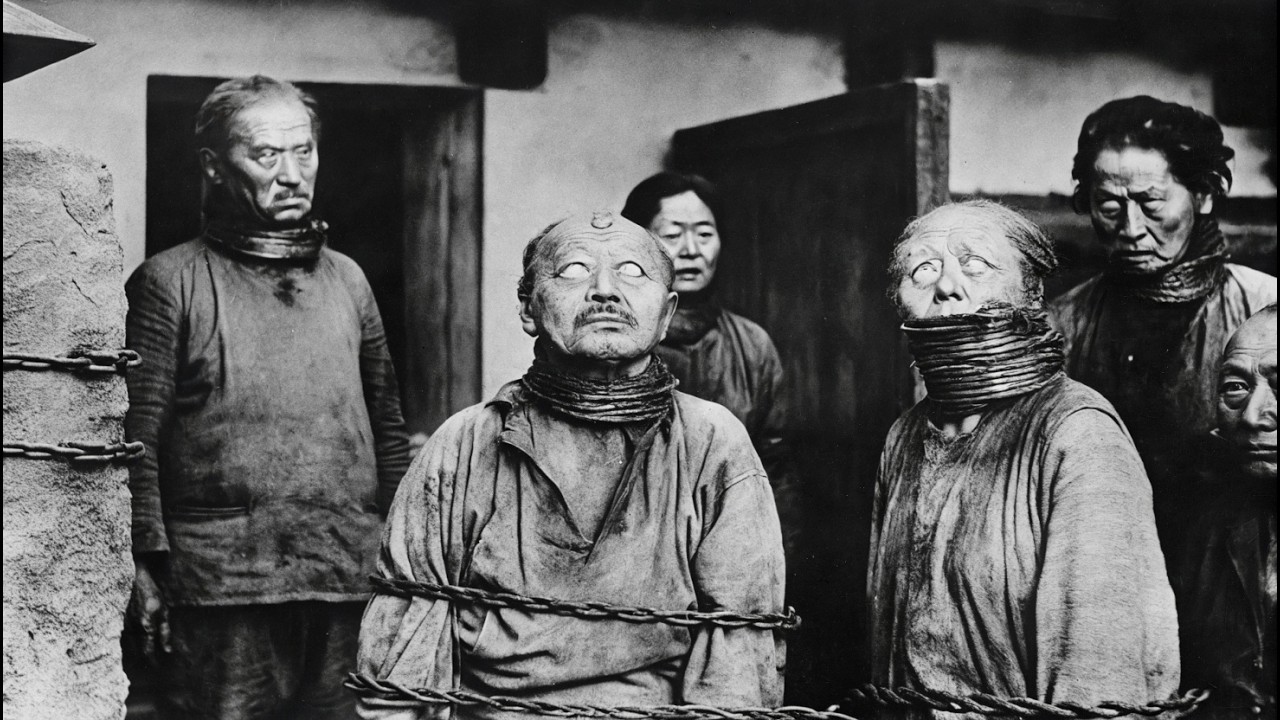
A human face can endure for centuries, even when personal memories and surviving records have vanished almost entirely.
The resulting images encourage difficult questions about remembrance, historical evidence, and the countless individuals overlooked by conventional narratives.
Unlike written histories centered on powerful leaders, photographs frequently preserve ordinary people whose contributions received little public acknowledgment.
A street vendor, factory employee, household servant, or schoolchild might unexpectedly become the most compelling figure within an image.
Their expressions invite curiosity, but understanding their circumstances requires more than observing their faces or imagining private emotions.
The distance between what a photograph shows and what viewers believe becomes essential to interpreting historical imagery responsibly.
Every photograph presents a visible moment, yet the circumstances surrounding its creation may remain partially or completely unknown.
A smiling family might appear prosperous without revealing financial difficulties, personal conflicts, or uncertainties extending beyond the camera’s frame.
Similarly, a solemn portrait cannot independently establish sadness, fear, grief, or any particular emotion experienced by its subject.
Historical photography becomes most revealing when visible details are considered alongside documented circumstances rather than unsupported emotional assumptions.
The earliest surviving photographs introduced an extraordinary possibility: people could preserve recognizable visual evidence beyond their own lifetimes.
Before photography developed, painted portraits generally required artistic skill, sufficient financial resources, and access to willing portrait artists.
Ordinary families often possessed few visual representations of relatives, making the preservation of individual appearances an uncommon privilege.
Photography gradually expanded that possibility, although technological limitations initially restricted who could participate and how frequently images appeared.
Early photographic equipment required specialized knowledge, careful preparation, and exposure conditions considerably different from modern handheld cameras.
Subjects sometimes remained unusually still because photographic processes demanded patience and dependable positioning throughout the exposure itself.
Consequently, rigid postures and serious expressions frequently reflected practical circumstances rather than the personalities viewers might instinctively imagine.
Modern audiences accustomed to spontaneous smartphone photographs can easily misunderstand the deliberate appearance of early studio portraiture.
For many individuals, having a portrait made represented a meaningful occasion rather than an ordinary part of daily life.
Families sometimes selected their finest available clothing, arranged formal poses, and treated the resulting image as a treasured possession.
These details reveal how photography became connected with dignity, personal identity, family relationships, and the desire for remembrance.
A surviving portrait might therefore represent someone’s carefully prepared public appearance rather than a candid view of everyday existence.
Even so, the image can preserve meaningful evidence about clothing, hairstyles, furniture, photographic techniques, and social expectations.
Those apparently minor details help historians estimate periods, investigate regional customs, and understand changing standards of personal presentation.
Photographs also document technological progress through the objects appearing beside people who might otherwise remain historically invisible.
An early automobile, electric streetlight, telephone, or industrial machine can help place an otherwise unidentified image within context.
Such objects reveal how technological change entered ordinary environments before becoming familiar parts of modern American daily life.
A single street photograph may contain several overlapping historical developments that contemporary observers considered entirely routine or unremarkable.
Horse drawn vehicles might appear beside emerging motorcars, illustrating a transitional period when older transportation systems remained necessary.
Buildings constructed decades apart can similarly reveal the gradual transformation of commercial districts, neighborhoods, and community gathering places.
These visual contrasts make historic streetscapes particularly valuable because urban development rarely occurred through one complete, instantaneous replacement.
Cities expanded through countless decisions involving transportation, housing, employment, commerce, public services, and changing patterns of population growth.
Photography captured fragments of those changes, sometimes preserving neighborhoods that later disappeared through redevelopment, destruction, or deliberate demolition.
For descendants of former residents, such photographs may provide meaningful connections to places their families once called home.
A demolished storefront or vanished neighborhood gathering place can evoke powerful memories even when its original occupants remain unidentified.
However, nostalgia should not obscure the economic pressures, social inequalities, and personal hardships often embedded within historical urban life.
Some picturesque streets lacked adequate sanitation, while crowded housing conditions created serious challenges for many working families living nearby.
Photographs displaying elegant architecture can therefore coexist with historical realities involving poverty, segregation, unsafe labor, and unequal opportunities.
Understanding those contradictions helps distinguish thoughtful historical interpretation from romanticized impressions created through attractive surviving images alone today.
The same principle applies to photographs documenting industrial development during periods of rapid American economic and technological expansion.
Factory photographs can display impressive machinery while revealing little about workers’ schedules, wages, injuries, or available legal protections.
The equipment might symbolize progress to business owners while representing exhausting labor conditions for employees operating beside it.
Different interpretations can emerge from the same photograph because the experiences of people involved were rarely identical historically.
This complexity becomes especially important when examining images featuring children employed in factories, mines, mills, or agricultural settings.
Documentary photographer Lewis Hine became known for recording child labor and drawing public attention toward working conditions nationwide.
His photographs helped transform individuals often overlooked in economic discussions into recognizable people whose experiences demanded public consideration.
The images showed children within workplaces, challenging audiences to confront the human consequences of labor practices then considered acceptable.
Yet even powerful documentary photographs require supporting information about locations, dates, employment arrangements, and the subjects themselves involved.
A photograph may demonstrate someone’s presence at a workplace without establishing every surrounding circumstance of that person’s employment.
This distinction matters because responsible historical storytelling depends upon evidence rather than dramatic conclusions extracted from appearance alone.
Hine’s broader documentary work illustrates photography’s capacity to connect individual experiences with structural problems affecting entire communities nationwide.
A single child’s face can make an abstract debate feel personal without independently explaining every dimension of industrial reform.
That emotional accessibility represents one of photography’s greatest strengths, but it also demands considerable care from modern interpreters.
The most memorable historical images often encourage viewers to imagine the circumstances surrounding moments captured generations earlier visually.
Some depict enormous public gatherings, while others preserve small domestic scenes that might otherwise attract little historical attention.
A family sharing a meal may reveal household furnishings, table arrangements, clothing choices, and domestic customs of its era.
A classroom photograph might document educational environments, student demographics, classroom materials, and the relationship between architecture and instruction.
A rural gathering can preserve agricultural practices, community traditions, transportation methods, and clothing adapted to specific working conditions.
These ordinary settings remind viewers that historical change unfolded through everyday experiences rather than famous events alone exclusively.
The people responsible for maintaining households, raising children, preparing meals, and supporting communities shaped history without necessarily receiving recognition.
Their contributions frequently survive indirectly through personal photographs, household objects, community records, and memories passed between generations orally.
When those materials disappear, entire dimensions of everyday life can become difficult for later researchers to reconstruct accurately.
That vulnerability gives unidentified photographs a particular significance, even when their original purpose was modest or entirely personal.
A family album might eventually become the only remaining visual record of relatives whose written histories never survived.
Likewise, an inexpensive studio portrait can become historically valuable after accompanying documents, addresses, and personal correspondence disappear completely.
The photograph remains physically present, but its relationship to a specific life may become increasingly difficult to establish.
Without identifying information, researchers must approach the image through visible evidence and whatever related materials remain available today.
Clothing styles can suggest a broad historical period, although fashions often persisted across regions and socioeconomic groups differently.
Architectural features may provide geographic clues, but similar building designs frequently appeared in multiple communities across the country.
Signs, advertisements, license plates, and recognizable landmarks sometimes offer stronger evidence when their details remain sufficiently legible today.
Even these clues require caution because photographs may have been copied, mislabeled, altered, or preserved without reliable provenance.
An old handwritten caption is valuable evidence, but its accuracy depends upon the knowledge of whoever originally wrote it.
Family members sometimes identify relatives incorrectly after decades of retelling stories or examining photographs without supporting documentation available.
Later collectors may assign locations based on assumptions that appear convincing but cannot withstand closer historical scrutiny afterward.
Consequently, responsible identification involves comparing independent evidence instead of treating one intriguing visual detail as definitive proof.
Researchers may consult city directories, census records, newspapers, property records, and historical maps when investigating unidentified photographs today.
Together, these materials can establish whether a suggested person, location, or event reasonably matches the available photographic evidence.
Sometimes a combination of clues supports a strong identification, restoring a name to someone previously remembered only visually.
Other investigations produce several plausible explanations without enough evidence to establish which interpretation accurately reflects the original circumstances.
That uncertainty should remain visible rather than disappearing beneath storytelling designed to provide artificially satisfying answers for readers.
The absence of a definitive conclusion does not make the photograph meaningless or diminish its potential historical importance.
Instead, unanswered questions reveal how much knowledge depends upon fragile records, accurate preservation, and connections between surviving materials.
Historical photographs also expose the unequal ways societies documented different groups and preserved their experiences across successive generations.
Wealthy individuals generally possessed greater opportunities to commission portraits, maintain family archives, and preserve personal possessions for posterity.
People facing economic hardship often had fewer resources available for creating and protecting comparable visual records over time.
Social discrimination could further determine whose experiences received institutional attention and whose memories remained excluded from official archives.
As a result, surviving photographic collections cannot automatically be considered representative records of entire historical populations or communities.
They reflect decisions made by photographers, subjects, collectors, publishers, archivists, and institutions operating under different historical circumstances.
A photograph’s survival may depend upon chance as much as upon the historical significance of its original subject.
Families discarded images, buildings burned, personal collections scattered, and fragile materials deteriorated through generations of ordinary household transitions.
The photographs available today therefore represent only a small portion of the images originally created across previous centuries.
This reality complicates attempts to reconstruct complete histories from collections containing substantial gaps and uncertain identifying information today.
A photograph showing a prosperous neighborhood cannot establish that neighboring communities enjoyed comparable living conditions during that period.
Likewise, one image depicting hardship should not automatically define the experience of every person sharing similar circumstances historically.
Careful interpretation considers both the subjects shown and those whose experiences remain absent from surviving visual records altogether.
Questions about absence become especially meaningful when researching communities affected by displacement, discrimination, warfare, or widespread economic disruption.
Photography sometimes preserved evidence of those experiences, although surviving records may reflect the perspectives of outside observers instead.
Who controlled the camera could influence which moments appeared important and how photographed individuals were subsequently represented publicly.
Photographers selected subjects, arranged compositions, controlled framing, and decided when the shutter would capture a particular moment visually.
Those decisions shaped the resulting historical record, even when photographers sincerely intended to document events with accuracy and fairness.
Images created for newspapers, government agencies, personal albums, or commercial publications often served substantially different original purposes historically.
A promotional photograph might emphasize prosperity, while a documentary image could concentrate on difficulties requiring public recognition instead.
Neither perspective necessarily captures the full reality surrounding the people, locations, and events represented within the photograph itself.
Understanding original purpose helps viewers recognize why certain elements received attention while other significant details remained outside view.
Photography became especially influential during major conflicts, when governments, journalists, soldiers, and civilians sought to document extraordinary circumstances.
Images of wartime destruction provided powerful evidence of consequences that official reports sometimes described through distant statistical language.
Photographs of soldiers also preserved individual faces within military institutions remembered primarily through battles, commanders, and strategic decisions.
Yet a portrait of a uniformed individual cannot independently reveal that person’s beliefs, experiences, or eventual fate afterward.
Identifying military units, locations, or equipment may require comparison with specialized historical records and carefully dated supporting documents.
Even when identification succeeds, many important details about personal experiences may remain beyond the reach of surviving evidence.
This gap illustrates the difference between documenting someone’s presence in history and recovering that person’s complete personal story.
The camera records visible information, while lived experience also includes memories, intentions, relationships, and emotions beyond direct observation.
Historical storytelling becomes strongest when it respects this distinction while exploring the documented circumstances surrounding recognizable human faces.
Another revealing example comes from photographs produced during the Great Depression, when economic hardship affected millions of Americans.
Government supported documentary projects recorded agricultural communities, migrant workers, struggling families, and changing conditions across the United States.
Among the most recognized images is Dorothea Lange’s photograph commonly known as Migrant Mother, featuring Florence Owens Thompson.
The photograph became an enduring visual representation of Depression era hardship, carrying meaning far beyond its original photographic session.
Its prominence also demonstrates how an individual photograph can acquire broader symbolic significance through publication and public interpretation afterward.
However, the experiences of recognizable subjects may be more complicated than the meanings later audiences attach to their images.
Personal identity should never disappear entirely beneath the symbolic role a photograph acquires within a national historical narrative.
A famous image may represent widespread suffering while still depicting a specific person with an individual life afterward.
That tension between collective memory and personal experience deserves attention whenever historical photographs become cultural symbols over time.
Lesser known photographs can raise equally meaningful questions despite never achieving widespread recognition in newspapers or museum exhibitions.
An unidentified worker standing outside a mill may reveal ordinary labor conditions without becoming a celebrated historical figure.
A photograph of children playing near an unfamiliar street might preserve community life unavailable through official written records.
Such images demonstrate that historical importance cannot always be measured through fame, public attention, or recognizable subject matter alone.
Visual records can offer insights into daily routines that contemporary writers considered too ordinary to describe in detail.
Street markets reveal economic activity, while storefront displays suggest consumer preferences, advertising methods, and local commercial competition historically.
Public transportation scenes document changing infrastructure alongside the practical experiences of passengers navigating developing urban environments each day.
Photographs of sporting events, parades, and social gatherings preserve leisure activities and community identities across different generations too.
These subjects may appear less dramatic than political upheaval, yet they reveal how people experienced their surrounding societies.
Historical understanding improves when famous public events are considered alongside the smaller experiences shaping ordinary people’s daily lives.
Vintage images can also challenge assumptions about how quickly cultural standards and personal lifestyles changed across different historical periods.
Certain clothing styles persisted long after newer fashions appeared, particularly when cost and local availability influenced household decisions.
Likewise, technologies often reached wealthy urban neighborhoods before becoming commonplace in rural or economically disadvantaged communities much later.
Photographs capture these uneven transitions, revealing overlapping stages of development that simplified historical timelines sometimes overlook entirely today.
An apparently outdated object does not necessarily indicate an older photograph when regional differences and economic circumstances remain relevant.
These complications explain why careful dating requires multiple clues instead of relying upon a single familiar visual feature.
Photographic materials themselves may offer evidence, including printing techniques, paper characteristics, mounting styles, and image formats used historically.
Specialists sometimes examine these physical properties to estimate when particular photographic objects were produced or reproduced afterward accurately.
Importantly, the age of a print may differ from the date when its underlying image was originally captured.
A twentieth century reproduction might display a nineteenth century scene, creating confusion when physical and visual evidence diverge.
Digital circulation introduces additional challenges because copied images frequently lose identifying captions, ownership records, and original contextual information.
A photograph shared thousands of times may eventually acquire misleading descriptions that become familiar through repetition alone online.
Some images circulate with incorrect dates, locations, or names despite having no reliable documentation supporting those claims whatsoever.
Modern editing tools can further complicate interpretation by altering visual details without making those changes immediately apparent to viewers.
Colorized photographs present another interesting challenge because added colors may reflect research, artistic decisions, or uncertain historical assumptions.
Colorization can make old photographs emotionally accessible, but its visual realism should not automatically be confused with documented accuracy.
The original monochrome image remains an important reference when distinguishing preserved photographic evidence from later creative interpretation choices.
Similar caution applies when digital restoration replaces damaged details that cannot be confidently reconstructed from surviving information alone.
A restored face may appear remarkably clear, although some reconstructed features could originate from software predictions rather than evidence.
These techniques can improve appreciation, but responsible presentation should disclose meaningful alterations when they affect historical interpretation substantially.
Preserving original versions allows future researchers to reconsider interpretations as analytical methods and available documentation continue improving over time.
Archival preservation therefore involves more than protecting attractive pictures from physical deterioration or accidental destruction over the years.
It requires documenting origins, maintaining descriptive records, identifying uncertain information, and safeguarding connections between related historical materials carefully.
A photograph with accurate contextual information often possesses greater research value than an identical image separated from its history.
Dates, locations, photographers, subjects, and original captions can transform an unidentified scene into a meaningful documented historical resource.
Even incomplete descriptions provide useful starting points when archivists clearly distinguish verified information from tentative identifications and assumptions.
For families, this responsibility frequently begins with organizing personal albums and recording memories while knowledgeable relatives remain available nearby.
A handwritten note identifying grandparents, neighborhoods, or important family occasions may eventually prove invaluable to later generations.
Recording uncertainty can be equally helpful because future descendants should know when an identification represents speculation rather than confirmation.
Simple preservation decisions can prevent valuable context from disappearing when albums change ownership or household possessions become dispersed.
Careful handling and appropriate storage also reduce the damage caused by sunlight, moisture, contamination, and repeated physical contact.
Digital copies improve accessibility, but they do not automatically replace the archival value of properly preserved photographic originals.
Physical objects sometimes contain identifying marks, inscriptions, or production details that ordinary digital scans fail to capture fully.
Maintaining both descriptive information and original materials gives future historians stronger foundations for understanding the photographed individuals involved.
Beyond archival concerns, historical photography raises ethical questions about displaying people who never expected audiences generations into the future.
A private family portrait may eventually enter public circulation without surviving evidence of its subjects’ wishes or intentions.
Images showing poverty, injury, death, or personal distress require particular sensitivity because their subjects experienced actual human circumstances.
Turning such photographs into sensational entertainment risks reducing complex individuals to objects of curiosity rather than historical understanding.
Responsible storytelling can acknowledge powerful emotions without inventing personal suffering or presenting unsupported accusations as established historical facts.
The most respectful approach emphasizes what evidence establishes while remaining transparent about questions that available records cannot answer.
That principle becomes increasingly significant when viral content rewards extraordinary claims and dramatic descriptions over careful contextual explanation.
A striking image may attract attention immediately, but attention alone cannot establish the truth of accompanying historical assertions.
Viewers benefit from asking whether photographs have reliable identification, documented provenance, and supporting evidence from independent historical materials.
They should also consider whether dramatic captions describe visible facts or introduce assumptions extending beyond the surviving evidence.
An unidentified expression cannot prove a hidden tragedy, just as an unusual object cannot automatically establish mysterious circumstances.
Historical images become more compelling through genuine investigation than through fictional secrets attached to otherwise unexplained visual details.
Sometimes the most important discovery is simply recognizing that an ordinary photograph contains evidence overlooked by earlier observers entirely.
A business sign might connect an image to a documented address, narrowing possibilities for its date and location.
A recognizable building could link the photograph with historical maps that reveal how an entire neighborhood developed afterward.
A military insignia might help identify a unit, although additional records would still be necessary for confirmation later.
A school emblem or community organization banner may similarly provide clues about the people gathered inside a photograph.
Each discovery becomes meaningful when researchers explain its limitations instead of presenting possibilities as unquestionable historical conclusions prematurely.
Even after careful analysis, some subjects will remain unnamed because the necessary identifying records no longer survive today.
Their anonymity should encourage reflection rather than unsupported speculation about hidden crimes, forbidden relationships, or extraordinary personal secrets.
The image still documents that a real person existed within a specific social and material historical environment once.
That recognition carries emotional weight because most human lives eventually disappear from widely remembered public narratives over time.
History textbooks cannot preserve every individual experience, and even extensive archives contain unavoidable omissions and incomplete personal records.
Photography offers a partial response by preserving visible traces of people who might otherwise leave little historical evidence.
The resulting connection between past and present can feel unusually immediate despite enormous differences in circumstances and technology.
A face photographed generations earlier may appear familiar because human expressions remain recognizable across changing cultural environments worldwide.
Nevertheless, apparent familiarity does not erase the historical distance separating modern viewers from the people within these images.
Their expectations, opportunities, responsibilities, and social relationships were shaped by circumstances requiring careful contextual understanding from researchers.
Appreciating both familiarity and difference allows photographs to become bridges toward history without flattening its complexities entirely.
Rare vintage images invite viewers to examine the past through details larger historical narratives sometimes overlook or simplify.
They reveal environments that changed, technologies that disappeared, and individuals whose personal stories may never be completely recovered.
Their greatest value lies not in imagined secrets, but in the evidence and questions they genuinely preserve today.
A forgotten face cannot explain its entire lifetime, yet its surviving image can still inspire meaningful historical inquiry.
The responsibility belongs to present generations to protect these records, investigate their contexts, and respect their uncertainty carefully.
Every preserved photograph offers another opportunity to understand ordinary lives within the larger movements of human history today.
Some mysteries may eventually yield to new documents, careful research, or families rediscovering long forgotten identifying information elsewhere.
Others will remain unresolved because photography captured appearances without recording the complete experiences of those standing before cameras.
Ultimately, these images remind us that remembering history involves understanding both what survives and what has disappeared forever.


