Nero Did Not Need to Burn Rome to Damage Its Future, as His Silver Coinage Reform Reveals a Deeper Imperial Crisis
The Great Fire of 64 CE made Nero infamous, but his changes to Rome’s silver currency raise another question: how much damage can a ruler inflict when imperial extravagance meets financial pressure?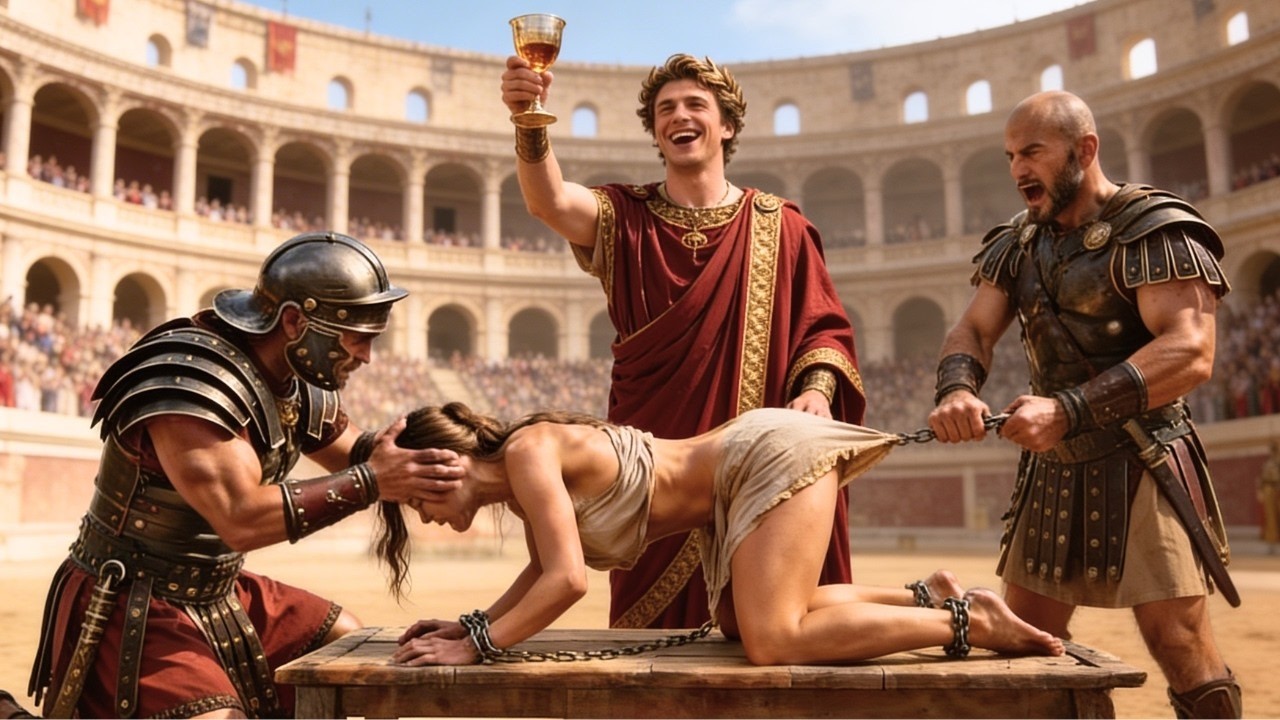
Historical note: Nero’s monetary reform around 64 CE reduced the weight and silver fineness of the denarius. However, the claim that he secretly caused a continuous 300-year inflationary collapse solely to finance his Golden House is not supported by the historical evidence. Rome’s later monetary crises involved many emperors, wars, fiscal pressures, and structural changes.
The Emperor Remembered for the Wrong Sound
ROME, 64 CE — Flames swept through the imperial capital, destroying neighborhoods, temples, shops, and homes while terrified residents searched for safety.
The disaster became inseparable from the reputation of Emperor Nero, whose name would eventually symbolize tyranny, extravagance, and political irresponsibility.
For centuries, popular culture repeated the familiar image of Nero playing music while his own city burned around him.
Yet the famous story contains a glaring anachronism, because the violin-like fiddle associated with the legend did not exist in ancient Rome.
Ancient writers instead discussed allegations that Nero performed or sang about the destruction of Troy during the catastrophe.
Even those accounts remain contested, and historians cannot establish that Nero deliberately started the fire.
But another event from approximately the same period deserves attention because it affected something far more fundamental than imperial reputation.
Around 64 CE, Nero altered the Roman monetary system, reducing the precious-metal content of the empire’s principal silver coin.
The decision would become an important chapter in the long history of Roman currency debasement, fiscal pressure, and declining monetary stability.
The Silver Coin That Held an Empire Together
The Roman denarius was among the most important coins circulating throughout the empire during the early imperial period.
Soldiers received pay denominated in Roman money, merchants conducted transactions, and provincial communities increasingly participated in an interconnected monetary economy.
The denarius was especially significant because its value rested partly upon the silver it contained and confidence in imperial coinage.
Under Augustus, the coin had generally maintained a relatively high level of silver purity, reinforcing its reputation as dependable money.
Its recognizable design and imperial imagery helped communicate political authority across territories stretching from Britain to the eastern Mediterranean.
Every coin carried more than purchasing power, because it also represented the government’s ability to establish and maintain accepted standards.
Roman monetary arrangements were complex, and coin values depended upon legal conventions, metal content, circulation, and public confidence.
Nevertheless, reducing the amount of silver in widely used currency created opportunities for the state to stretch its precious-metal reserves.
This made coinage an attractive instrument for emperors confronting military expenditures, public construction costs, and the financial demands of governing.
Nero’s Monetary Reform of 64 CE
Around 64 CE, Nero introduced changes to the weight and fineness of Roman gold and silver coinage.
The denarius, previously struck at roughly 3.9 grams under the earlier standard, was reduced to approximately 3.4 grams.
Its silver fineness also declined from very high purity to a somewhat lower level, often estimated at approximately 93.5 percent.
These figures vary slightly across scholarly measurements, but the overall reduction in silver content is well established through numismatic evidence.
The reform allowed more coins to be produced from a given quantity of precious metal, potentially increasing the government’s spending capacity.
That advantage could prove useful for an administration responsible for soldiers, officials, public entertainment, construction, and the imperial household.
However, the precise motives behind Nero’s reform cannot be reconstructed from a surviving secret treasury memorandum.
The change may have reflected broader fiscal pressures rather than a single plan to finance one extravagant architectural project.
Its significance lies in the government’s willingness to alter monetary standards while continuing to issue coins bearing the emperor’s authority.
How Much Silver Disappeared?
The difference between the earlier and later denarius standards may seem modest when measured in grams, but the cumulative implications were substantial.
A coin that weighed less and contained slightly less pure silver required fewer precious-metal resources to manufacture.
For the imperial treasury, this meant that an existing stock of silver could support the production of additional coins.
For people receiving those coins, the change reduced the intrinsic metal content of each unit of currency.
But it does not follow automatically that every soldier or merchant immediately experienced an equivalent reduction in purchasing power.
Ancient prices, wages, monetary conventions, and regional economic conditions interacted in ways that complicate simple calculations of inflation.
The distinction between monetary debasement and immediate price inflation is essential to understanding the reform’s historical consequences.
Nero’s policy created a precedent for manipulating coin standards, but the full economic effects depended upon circumstances beyond the silver content alone.
The Golden House That Defined Imperial Excess
Following the Great Fire, Nero began constructing the Domus Aurea, or Golden House, an extraordinary palace complex within Rome.
Its grounds occupied an enormous area, although estimates of its exact extent differ according to how the complex is defined.
Ancient descriptions emphasize luxurious rooms, elaborate decoration, landscaped spaces, and architectural features designed to astonish visitors.
The palace became a symbol of Nero’s extravagance because its construction followed a disaster that had left many ordinary residents homeless.
Critics interpreted the project as evidence that the emperor had benefited from Rome’s destruction, regardless of whether he had caused the fire.
The Golden House also contributed to the image of a ruler more interested in personal magnificence than traditional Roman restraint.
Its construction required significant resources, skilled labor, and administrative coordination during an already demanding period.
Yet the surviving evidence does not establish that the entire monetary reform was specifically designed to pay for the palace.
The connection between fiscal pressure and extravagant spending is plausible, but a direct one-project explanation oversimplifies imperial financial management.
Did Nero Rob His Soldiers?
The Roman army represented one of the empire’s largest and most persistent financial obligations.
Legionaries required regular compensation, while military operations demanded supplies, transport, equipment, and payments to supporting personnel.
Debasement could enable the state to meet nominal obligations while using less precious metal than earlier coinage standards required.
This creates an understandable concern that soldiers might receive money containing less silver without a corresponding increase in pay.
However, describing Nero’s reform as a straightforward confiscation of legionaries’ wages assumes economic effects that cannot be demonstrated so simply.
A soldier’s actual purchasing power depended upon prices, deductions, local markets, and the broader availability of goods.
The denarius continued circulating after the reform, and Rome did not experience an immediate empire-wide monetary collapse under Nero.
The policy nevertheless illustrates how rulers could shift fiscal pressures into the monetary system rather than relying exclusively upon taxation.
The Great Fire and the Politics of Blame
The Great Fire began in July 64 CE and spread through Rome for several days, devastating extensive areas of the capital.
The historian Tacitus later described the catastrophe and the rumors surrounding Nero’s behavior during the emergency.
Tacitus reported that Nero provided relief measures and organized responses, while also recording suspicions that the emperor had ordered the destruction.
He did not establish Nero’s responsibility for starting the fire, and modern historians continue treating the accusation with caution.
The emperor’s subsequent construction projects intensified resentment because they appeared to transform devastated urban space into imperial luxury.
Ancient accounts also describe Nero blaming Christians and subjecting members of the group to brutal punishment.
These events helped shape his reputation, combining the memory of urban disaster with allegations of cruelty and self-indulgence.
But the fire and the monetary reform should be examined as related historical developments rather than proof of a single concealed conspiracy.
A Currency Reform Was Not an Instant Collapse
Nero’s denarius reform did not immediately destroy Roman commerce, military organization, or public confidence in imperial money.
The empire continued functioning after his death in 68 CE, despite the political instability that followed during the Year of the Four Emperors.
Subsequent rulers inherited a monetary system that remained capable of supporting extensive trade and government expenditure.
The long-term story of Roman debasement unfolded unevenly, with periods of relative stability interrupted by significant reductions in precious-metal content.
The most severe transformations occurred much later, particularly during the third century CE.
By that period, emperors faced intense military pressures, political instability, repeated changes of leadership, and challenges in raising sufficient revenue.
The silver content of some widely circulated coins declined dramatically, contributing to major changes in Roman monetary practices.
Nero’s reform therefore belongs near the beginning of a long monetary history, not at the end of a direct and inevitable economic chain.
The Third-Century Crisis
The third century CE brought a period of exceptional instability often called the Crisis of the Third Century.
Rome confronted repeated civil wars, frontier invasions, short-lived emperors, and enormous demands upon its military resources.
These pressures placed increasing strain on government finances and encouraged rulers to seek additional means of funding the army.
Coinage changes became more pronounced, especially through the debasement of the antoninianus, introduced under Caracalla in the early third century.
Over time, this coin’s silver content declined severely, leaving later issues with only limited amounts of precious metal.
The resulting monetary difficulties reflected far more than Nero’s earlier decision to reduce the denarius standard.
Political fragmentation, military expenditure, disruptions to production, and changes in taxation all influenced the empire’s economic condition.
The monetary crisis was serious, but it cannot responsibly be explained as the automatic consequence of one emperor’s vanity project.
Why Debasement Can Become Dangerous
When a government issues coins containing less precious metal, it may gain temporary fiscal flexibility without immediately increasing conventional taxes.
But repeated reductions can weaken confidence, especially if people begin questioning the relationship between official coin values and underlying metal content.
Merchants may adjust prices, individuals may retain older high-value coins, and monetary transactions can become more complicated.
These outcomes depend upon the structure of the economy, the scale of debasement, and the government’s ability to maintain credibility.
The process is not always immediate, uniform, or irreversible, as monetary systems can adapt through reforms and changing conventions.
Nevertheless, severe and repeated debasement can become part of a broader fiscal crisis when government obligations exceed available resources.
Roman history offers important examples of these pressures, particularly during the third century.
The central problem was not simply that emperors made coins lighter, but that fiscal demands increasingly strained the state’s capacity.
The Emperor Who Tried to Rebuild Rome
Nero’s response to the Great Fire included reconstruction measures and changes to aspects of the city’s urban design.
Ancient accounts describe efforts to improve building arrangements, street widths, and the availability of water for firefighting.
These policies complicate the familiar portrayal of an emperor who responded to the catastrophe only through indifference or personal extravagance.
At the same time, the Golden House and other costly undertakings reinforced criticism of his priorities.
The coexistence of public reconstruction and imperial luxury illustrates the difficulty of reducing Nero’s administration to a single moral judgment.
He could pursue measures benefiting the city while simultaneously spending resources on projects that contemporaries considered excessive.
His monetary reform must be interpreted within this wider context of state obligations, imperial ambitions, and political competition.
The Cost of Maintaining Imperial Power
Roman emperors governed through a combination of military force, administrative institutions, elite cooperation, and public displays of generosity.
Their financial responsibilities extended well beyond palace construction, encompassing frontier defense, infrastructure, grain distributions, and payments to soldiers.
The empire’s territorial scale created logistical demands that were expensive even during periods of relative political stability.
When revenues proved insufficient or expenditures increased, rulers faced difficult choices involving taxation, borrowing-like arrangements, asset transfers, and coinage.
Reducing precious-metal content offered one way to increase the nominal supply of money available for government spending.
But the economic consequences depended upon how frequently such measures were repeated and whether confidence in the monetary system endured.
Nero’s reform demonstrates the attraction of monetary adjustment without proving that it alone undermined the entire imperial economy.
The Fall of Rome Was Not a Single Financial Accident
The Western Roman Empire’s political collapse in the fifth century resulted from a complex interaction of military, economic, and institutional developments.
Its history cannot be reduced to a continuous 300-year decline beginning with Nero’s reform.
Indeed, the empire experienced substantial periods of military recovery, administrative change, and economic adaptation after Nero’s reign.
The Eastern Roman Empire survived for many centuries beyond the fall of western imperial authority.
That survival alone complicates claims that Nero permanently destroyed the monetary foundations of the entire Roman world.
Historians instead examine shifting taxation systems, regional economic differences, military pressures, political legitimacy, and transformations in imperial administration.
Currency debasement forms an important part of this history, but it does not provide a complete explanation.
What Surviving Coins Actually Reveal
Modern knowledge of Nero’s monetary reform comes substantially from surviving coins and their physical analysis.
Numismatists examine weights, designs, inscriptions, metal composition, and the circumstances in which coins were discovered.
These methods allow researchers to identify changes in minting standards and compare coinage issued under different emperors.
The evidence is more concrete than a supposed secret treasury document confessing an elaborate plan to impoverish Roman soldiers.
It shows that Nero reduced precious-metal content, but it does not establish every motive attributed to him in sensational retellings.
Historical interpretation requires combining coin evidence with literary accounts, archaeological findings, and knowledge of imperial institutions.
This approach reveals a complicated monetary system rather than a single hidden fraud that instantly shattered the empire.
Nero’s Reputation and the Problem of Hostile Sources
Much of Nero’s popular image derives from ancient authors who wrote after his death and often viewed his reign critically.
Tacitus, Suetonius, and Cassius Dio preserve important information, but their accounts reflect different periods, interests, and literary traditions.
Their portrayals of Nero’s extravagance and misconduct shaped later interpretations of his political and personal character.
Modern historians therefore distinguish between events supported by multiple forms of evidence and stories primarily preserved through hostile anecdotes.
The Great Fire, Golden House, and coinage reform are real historical subjects, but their causal relationships require careful analysis.
The temptation to turn Nero into a single villain responsible for centuries of decline can obscure broader structural problems.
The Real Economic Lesson Behind Nero’s Silver
Nero’s reform reveals how an imperial government could increase monetary flexibility by reducing the precious-metal content of its coins.
That decision may have helped meet fiscal demands, although its exact motivations remain disputed.
It also demonstrates how rulers could change monetary standards in ways that ordinary people might not immediately recognize.
But the relationship between coin purity, prices, wages, and economic confidence was complex even in the ancient world.
A currency could remain useful despite changes in metal content, particularly when supported by established institutions and accepted payment conventions.
Severe problems emerged when monetary changes interacted with persistent fiscal pressures, instability, and declining confidence.
The lesson is not that every debasement inevitably destroys an economy, but that monetary policy cannot indefinitely compensate for unresolved financial problems.
Fire, Silver, and the Legacy of an Emperor
Nero died in 68 CE, ending the Julio-Claudian dynasty and opening a period of violent competition for imperial power.
His Golden House became an enduring symbol of extravagance, while the Great Fire continued shaping his reputation across centuries.
The denarius reform survived as a measurable change in Rome’s monetary history, visible through coins that remain available for study.
Unlike the legend of the fiddle, this reform does not depend upon an anachronistic image or an unsupported dramatic scene.
Its existence is established, even though its precise fiscal purpose and long-term effects remain matters of historical interpretation.
Nero’s administration therefore presents a revealing contrast between sensational legend and economic evidence.
The fire was spectacular, but monetary decisions could influence transactions far beyond the streets of Rome.
Yet neither event can be treated as the sole cause of the empire’s eventual transformation and fragmentation.
Was Nero’s Greatest Damage Financial?
The most important question is not whether Nero secretly engineered Rome’s collapse, because the surviving evidence does not support that claim.
Instead, it is whether his monetary choices reveal the dangers of allowing imperial ambitions to place increasing pressure upon public finances.
The Golden House symbolized the concentration of resources around an emperor whose public image depended heavily upon grandeur.
The coinage reform demonstrated that the state could alter established monetary standards to create additional fiscal room.
Together, these developments invite questions about the relationship between political prestige, spending priorities, and economic confidence.
But the Roman Empire’s later monetary crises emerged through centuries of changing conditions and decisions made by many different rulers.
Nero did not single-handedly destroy Roman money, but his reform remains an important early example of imperial currency debasement.
The Great Fire devastated Rome’s buildings, while the history of silver coinage reveals how financial pressures could spread through the empire’s institutions.
The deeper warning is that political power can conceal fiscal tradeoffs even when the consequences are ultimately borne across society.
Was Nero’s most consequential legacy the extravagant palace built after the fire, or the monetary precedent established during his reign?
And when governments face mounting expenses, how should history judge rulers who alter the value of money rather than confront their financial limits?
Share your verdict: was Nero chiefly a symbol of imperial vanity, or does his silver reform reveal a more enduring danger in the management of state power?


