Meghan Markle’s Alleged Letters About Her Father: The Family Scandal Raising New Questions
A controversy surrounding Meghan Markle, her father Thomas Markle, and allegations of child abuse has ignited fresh debate over a family estrangement that has lasted for years. Reports about two separate letters, an alleged photograph, and a newly publicized hospital encounter have created a tangled story in which crucial details remain unverified.
At the center of the controversy is a reported letter Meghan allegedly sent her father in December 2025, when Thomas Markle was receiving medical care in the Philippines. According to claims attributed to British tabloid The Sun, the letter contained a forceful accusation and a warning that he would never see his grandchildren. The exact wording and full contents of the letter have not been independently established here, making it important to distinguish reported claims from confirmed facts.
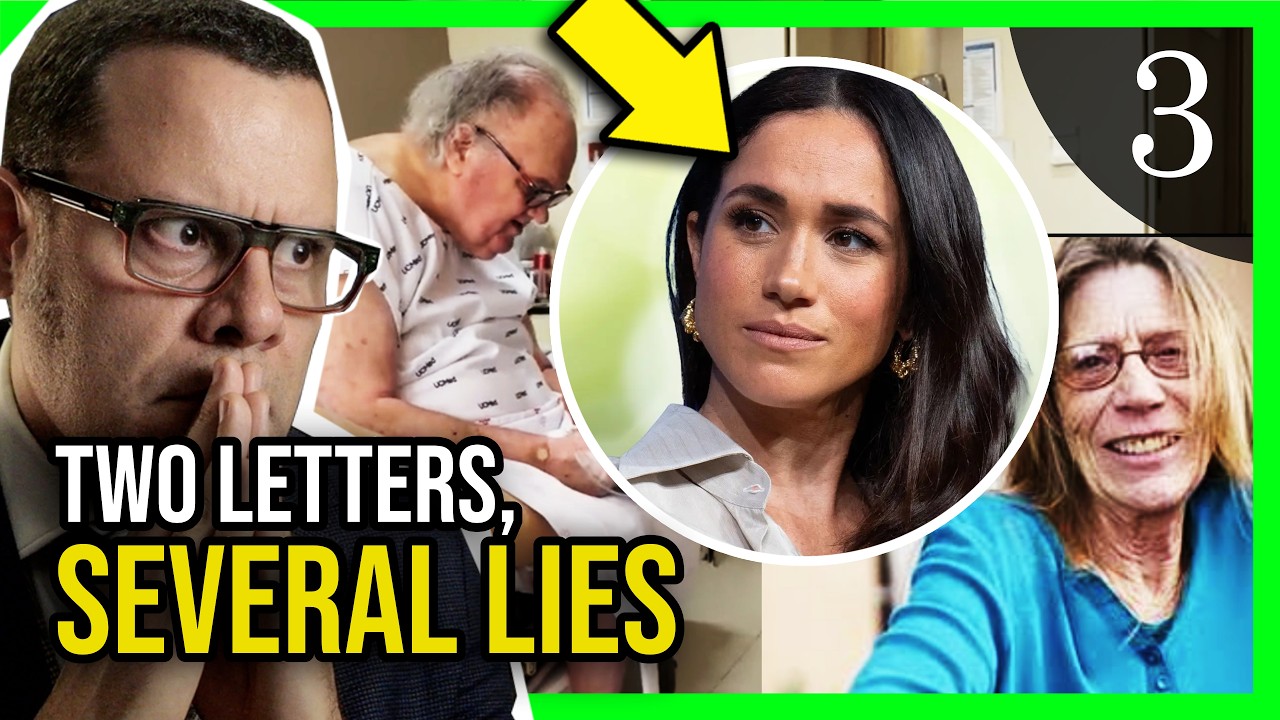
Footage described in the reports allegedly shows Thomas receiving and opening the envelope. The circumstances surrounding the recording have attracted attention, particularly because journalist Caroline Graham of the Daily Mail was reportedly present. Questions have been raised about why the exchange was filmed, who arranged it, and why the footage emerged publicly months after the alleged encounter.
Those questions have fueled speculation about the purpose of the recording. One interpretation is that it was intended to document delivery of the letter. Another possibility is that the circumstances were less unusual than commentators have suggested. Without independently verified information about who requested the recording and what arrangements were made, its purpose cannot be established with certainty.
The reported contents of the letter have also prompted questions about timing. If Meghan had confronted her father about alleged abuse in December 2025, why did the issue become a public controversy only later? And what, if anything, did Thomas say privately after receiving the letter?
The answers are not clear from the account alone. Thomas has reportedly denied the allegations, while also being described as experiencing memory difficulties. Those circumstances complicate attempts to reconstruct his reaction, but they do not establish whether the accusations are true or false. Nor does a delayed public response, by itself, demonstrate that someone is lying.
The footage has reportedly shown Thomas shaking his head, folding the letter, placing it back in its envelope, and asking Graham to put it away. Such actions reveal little about the contents of a document or a person’s understanding of it. Body-language interpretations cannot reliably establish whether someone is being truthful, concealing information, or reacting to a particular allegation.
A second letter has added another layer to the controversy. Reports have linked an earlier communication to Britain’s Metropolitan Police and allegations concerning Thomas Markle. The date has been described inconsistently in public commentary, with references to both 2018 and 2019. The precise timeline and the circumstances in which the letter was received require careful verification.
The letter has reportedly been attributed to Roslyn Markle, Thomas’s first wife, who later became known as Roslyn Loveless. She died in 2024, according to the account. Her death means she cannot now respond to the latest claims, but it does not establish that her alleged letter was fabricated, improperly motivated, or connected to Meghan.
Commentators have questioned why an American woman who reportedly lived outside Britain would contact a particular department of the Metropolitan Police rather than American authorities. That question may be relevant to understanding how the communication was prepared and delivered. However, the department chosen does not, on its own, demonstrate that Meghan was involved or that someone in Britain directed the letter’s author.
The account also cites a past interview in which Roslyn reportedly described Thomas as an awful father and expressed concerns about his relationship with his grandson. If accurately reported, those remarks would provide background to the family history. They would not independently prove the specific allegations now being discussed, nor would they establish who wrote or transmitted the police letter.
Thomas Markle Jr. has also reportedly spoken to The Sun, distancing himself from his father and describing a disturbing photograph that allegedly depicts abuse involving a child. The image has become a central point of debate, but its authenticity and context are crucial. Until it is independently authenticated and properly investigated, it should not be treated as proof of a crime.
Digital images can be manipulated, and modern image-generation tools have made fabricated visuals increasingly convincing. That does not mean the photograph in question is fake. It means that investigators would need to examine its provenance, original file, metadata where available, and any corroborating evidence before drawing conclusions about what it depicts.
The existence of boxes containing computers, videotapes, cameras, and magazines, as described in the reports, would not by itself establish wrongdoing either. The significance of any material depends on what it contains, how it was obtained, whether it can be authenticated, and whether it supports the allegations being made.
The wider family dispute has now become a contest of competing accounts, with relatives and media commentators interpreting the same events in sharply different ways. Some have suggested that Meghan’s alleged letter demonstrates she was aware of concerns about her father. Others have questioned the timing and handling of the correspondence. Neither interpretation should be mistaken for a verified finding about the underlying allegations.
There is also a fundamental distinction between knowing that an allegation has been made and knowing that it is true. A letter expressing concern, even if authenticated, would establish that its author communicated a particular belief or accusation. It would not automatically prove the alleged conduct occurred. Similarly, the absence of a publicly reported investigation does not establish that an allegation was false.
The role of the British police has also been questioned. The account suggests that Thomas was not investigated in connection with the reported letter, but that claim would need confirmation from reliable records or official statements. Without that evidence, it is impossible to determine precisely what authorities received, how they assessed it, or whether any action was considered.
Much of the controversy could be clarified by establishing the basic facts: the full text and date of each letter, the identity of each author, the circumstances in which the documents were delivered, and whether any relevant authorities examined the allegations. Authenticated records would help separate what was actually communicated from interpretations that have developed through media coverage.
Yet private correspondence involving allegations of serious abuse raises questions of privacy, fairness, and potential harm. Publishing a letter would not necessarily resolve every issue, particularly if it contained unsubstantiated claims or information about vulnerable people. Any disclosure would need to be evaluated in light of the public interest and the rights of those involved.
For now, the story remains a complicated mixture of reported correspondence, family accusations, disputed interpretations, and unanswered questions. The dramatic presentation of the events may encourage audiences to decide who is lying or who stands to benefit, but motive cannot be reliably inferred from media timing or family tension alone.
The most important question is not simply which relative appears more convincing in an interview. It is whether independently verifiable evidence supports the allegations, whether the documents can be authenticated, and whether the relevant authorities have established any facts through a proper process.
Until those questions are answered, claims about Meghan Markle’s alleged knowledge, Thomas Markle’s conduct, and the origins of the police letter should remain clearly attributed rather than presented as proven conclusions. The letters may be central to understanding the family dispute, but their existence and reported contents are not substitutes for evidence.
As the controversy continues to attract attention, the distinction between allegation and proof remains essential. The public deserves an accurate account of what happened, while the people involved deserve not to have unverified claims transformed into established facts simply because the story has become a media spectacle.


